
Easy Montessori at Home for Beginners: Simple Ideas to Get Started

📖 Table of Contents
- What Is Montessori, and Why Should You Care?
- How to Set Up a Montessori-Inspired Space at Home
- The Power of Freedom in Montessori
- Simple Montessori Activities for Everyday Life
- How to Involve the Whole Family in Montessori
- The Role of Sensitive Periods in Montessori
- How Montessori Helps with Emotional Regulation
- Make It Your Way
- Frequently Asked Questions
When my son was two, I stumbled upon a toy shelf in the corner of our living room. I realized how much time I’d spent trying to keep him entertained with screens and toys that never seemed to hold his attention. I remember the first time he picked up a wooden spoon from the kitchen drawer and began to explore it with his hands, completely absorbed. That moment sparked my curiosity about Montessori, and I began to research how I could bring that kind of natural, hands-on learning into our home. What I found was a philosophy that didn’t require expensive materials or a formal classroom — just a few simple changes to how we arranged our space and interacted with our child.
Montessori, for many, feels like something reserved for well-funded schools and trained teachers. But the truth is, the core principles are accessible to anyone willing to make a few thoughtful changes. I discovered that the biggest shift wasn’t about buying new items, but about giving our child the freedom to explore, choose, and move independently. It took me only a few days to start seeing the difference — less tantrums, more engagement, and a deeper connection with my child’s growing curiosity.[1]
Now, I’m able to guide my son through the day with a sense of calm and purpose that I never knew was possible. Whether it’s helping him pour water from a pitcher or inviting him to help with a simple task like folding a towel, the Montessori approach has made our home a place of learning and growth. If you're a parent who feels overwhelmed by the idea of Montessori, I want to assure you that it's not about perfection — it’s about small, intentional steps that make a big impact over time.
Why You'll Love This Easy Montessori Approach
- It reduces frustration and increases engagement for your child
- It builds independence and self-confidence from a young age
- It makes learning a natural, everyday part of life
- It can be adapted to any home and budget
What Is Montessori, and Why Should You Care?
As of November 2026, Montessori was developed in the early 1900s by Dr. Maria Montessori, an Italian physician and educator who believed that children learn best through hands-on exploration and sensory experiences. Today, Montessori is used in schools around the world and can be easily applied at home with the right mindset and a few simple changes to your environment.
At its core, Montessori is about giving children the freedom to learn at their own pace, in their own way. This means offering them opportunities to explore, choose, and do things on their own — within safe boundaries. For example, a toddler learning to pour water from a pitcher into a cup is not just practicing motor skills; they're learning about gravity, volume, and cause and effect.
By applying Montessori principles at home, you create a space where your child feels empowered and respected. This approach doesn’t eliminate the need for guidance — it simply shifts the focus from control to support. The result is a more confident, curious, and motivated child who is ready to learn and grow.
Observe your child closely and offer tasks that match their developmental stage. If they’re struggling with a task, it may be too advanced — adjust and simplify.
Part of our Montessori at home guide.
How to Set Up a Montessori-Inspired Space at Home
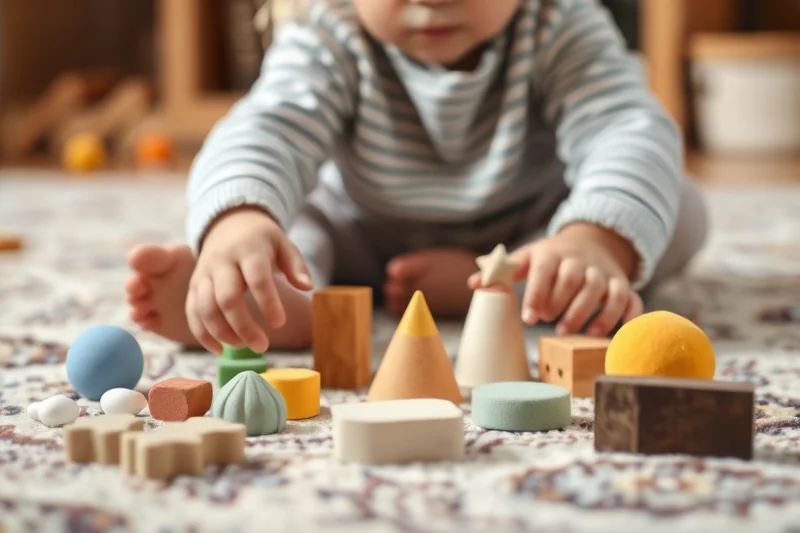
Start by identifying a few key areas in your home where your child can move and explore freely — like a kitchen table, a playroom, or even a corner of a living room. The goal is to make these spaces clutter-free and filled with open-ended materials your child can use independently.
Child-sized furniture is a game-changer. I bought a small chair and a low table, which allowed my son to sit and play without needing help. I also used baskets and shelves at his eye level to store his toys, books, and other materials. This not only makes things easier for him to reach, but it also helps him feel more in control of his environment.
The key is to avoid over-stimulating your space with too many options. I found that when I had too many toys, my son became overwhelmed and often didn’t know where to start. Now, I keep only a few items out at a time, and I rotate them regularly to keep things fresh and engaging.
A Montessori space is not about perfection — it's about intention.
Related: Montessori educational toys for toddlers
The Power of Freedom in Montessori
Freedom in Montessori doesn’t mean letting your child run wild or do whatever they want. Instead, it means offering them meaningful choices and opportunities to make decisions within a safe and supportive environment. This approach helps build confidence, self-regulation, and problem-solving skills.
When I first started applying Montessori at home, I noticed that my son was more engaged and less likely to throw tantrums. Instead of trying to direct him, I gave him simple choices — like picking out his own clothes or deciding what snack to have. This small shift made a big difference in his behavior and attitude.
Of course, this doesn’t mean there are no rules. The Montessori approach emphasizes clear, consistent boundaries. I’ve found that having one simple rule — like 'we clean up after we play' — helps create structure without stifling creativity or independence.
Instead of telling your child what to do, ask them questions like 'Would you like to wear the red shirt or the blue one?' This helps them feel in control and builds decision-making skills.
“When my son was two, I stumbled upon a toy shelf in the corner of our living room, and I realized how much time I’d…”— Thetraylife editors
Related: Montessori for bed
Simple Montessori Activities for Everyday Life
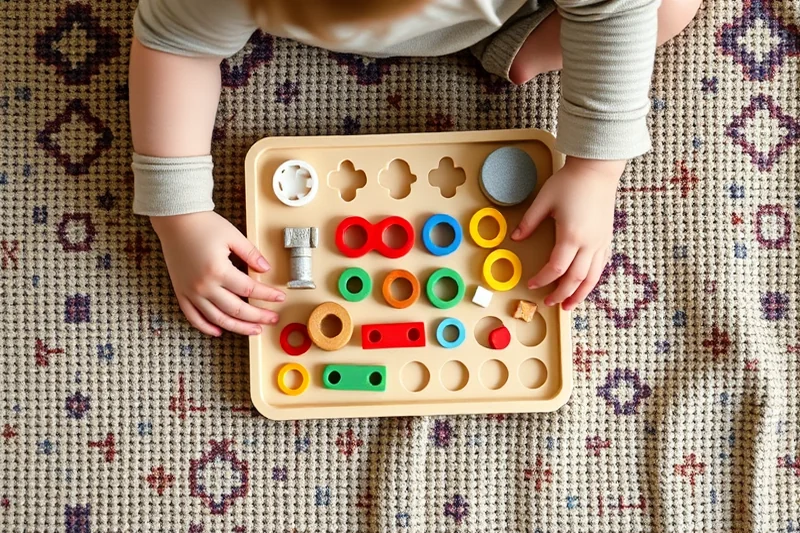
One of the most effective Montessori activities is helping your child with everyday tasks. This could be anything from pouring water into a cup to folding a towel or sorting laundry. These activities teach practical life skills, fine motor development, and responsibility.
I started by giving my son a small dish and a spoon to practice pouring water from a pitcher into the dish. At first, it was messy, but over time, he began to understand how much water he needed and how to control the flow. This simple activity turned into a game of estimation and self-correction.
The beauty of these activities is that they don’t require any special materials or preparation. They’re all about using what you already have and making it accessible to your child. I’ve found that even small tasks — like helping to set the table or water plants — can become valuable learning experiences.
Related: What is montessori generation
How to Involve the Whole Family in Montessori
Involving the whole family in Montessori helps create a consistent and supportive environment for your child. This means making small changes in how we interact, how we organize our space, and how we approach daily tasks.
I’ve found that when my husband and I both participate in Montessori activities with our son, it makes a huge difference in his confidence and engagement. We take turns helping him with tasks, and we also make time for him to teach us — like showing us how to use a new toy or explaining what he learned that day.
Family involvement also helps create a sense of unity and shared purpose. It shows our child that learning and growth are not just for them, but for all of us. This approach makes Montessori not just a parenting strategy, but a way of life that benefits the whole family.
Related: What is montessori education about
The Role of Sensitive Periods in Montessori
Sensitive periods are specific times in a child’s life when they are especially receptive to certain types of learning. These periods are critical for developing skills like language, movement, and social behavior.
For example, between the ages of 18 months and 3 years, children are in a sensitive period for language development. This is when they absorb language most easily and are eager to learn new words and sounds. By creating a language-rich environment, you can support this natural development.[2]
I’ve seen firsthand how understanding sensitive periods has helped me tailor my parenting approach. When my son was in the sensitive period for order, I made sure to keep our routines consistent and predictable. This helped him feel secure and supported, and it made transitions smoother for the whole family.
Understanding sensitive periods helps you become the best guide for your child’s growth.
Related: What is a montessori school about
How Montessori Helps with Emotional Regulation
One of the most powerful benefits of Montessori is that it helps children learn to regulate their emotions — both in the moment and over time. This is achieved by giving them the freedom to make choices, the tools to express themselves, and the space to explore their feelings in a safe environment.
I’ve found that when my son is given the opportunity to choose his own activities, he becomes more engaged and less likely to become overwhelmed. This helps him build self-regulation skills that will serve him throughout his life.
Montessori also teaches children to be self-aware and to recognize their emotions. By modeling emotional regulation ourselves and offering tools like a calm-down corner or a journal, we can help our children navigate their feelings in a healthy and constructive way.
🌿 Gentle Montessori
A slow, mindful approach that prioritizes connection and observation over structured activities.
🚀 Fast-Track Montessori
A quick, no-fuss version that focuses on the most impactful changes for your child.
🧳 Travel/away-from-home Montessori
Tips for applying Montessori principles while on the go or staying with family.
👶 Montessori for Multiples
How to adapt Montessori for twins, triplets, or siblings of different ages.
🔄 Montessori Reset for Regression
How to use Montessori principles to help your child through a developmental regression.
| The mistake | Why it happens | The fix |
|---|---|---|
| Overloading your child with too many choices or activities. | This can overwhelm your child and lead to frustration or disinterest in Montessori activities. | Start with a few simple choices and gradually introduce more as your child becomes more comfortable. |
| Trying to enforce Montessori too rigidly. | Montessori is about flexibility and respect for your child’s natural development, not about strict rules or expectations. | Allow your child to take the lead and adjust your approach based on their needs and interests. |
| Neglecting your own well-being in the process. | Applying Montessori can be demanding on parents, and it’s important to take care of yourself to provide the best support for your child. | Set realistic expectations and take breaks when needed. Remember, it’s okay to be imperfect. |
| Comparing your child to others. | Every child develops at their own pace, and comparing them to others can create unnecessary pressure and stress. | Focus on your child’s progress and celebrate their individual achievements, no matter how small. |
Easy Montessori At Home For Beginners
Common Questions
Can I apply Montessori if I work full-time?
Do I need to buy special Montessori materials?
How long does it take to see results?
Is Montessori suitable for all children?
References
- Evaluation of State- Funded Full-Day 4K (eoc.sc.gov)
- Arizona's Infant and Toddler Developmental Guidelines (azed.gov)
Cite this guide
Thetraylife (2026). Easy Montessori at Home for Beginners: Simple Ideas to Get Started. https://thetraylife.com/easy-montessori-at-home-for-beginners/
Feel free to cite or share this guide.
Montessori Tray Idea Generator
Age-filtered Montessori tray ideas from household items.
Open it free →