
Montessori at Home Curriculum Tips for Everyday Learning

📖 Table of Contents
- Creating a Montessori-Friendly Environment at Home
- Introducing Practical Life Skills as a Daily Practice
- Incorporating Nature into Everyday Learning
- The Power of Observation in a Montessori Home
- Incorporating Language Through Everyday Moments
- The Role of Rhythm and Routine in a Montessori Home
- Adapting Montessori Principles for Different Ages and Needs
- Using Sensory Exploration to Enhance Cognitive Development
- Make It Your Way
- Frequently Asked Questions
The first time I saw my daughter pick up a tiny wooden spoon and try to stir a bowl of water, I knew Montessori principles could work outside of a classroom. We had just moved into our new home, and I was desperate for a way to make learning feel natural and unforced. That moment, with her focused eyes and determined little hands, was the start of our Montessori journey at home — and it changed how we approached everyday life.[4]
I had never considered Montessori before, but after months of watching my child struggle to stay engaged during traditional educational activities, I found myself drawn to its emphasis on independence and exploration. I started by rearranging our kitchen, making it a space where she could reach shelves, handle utensils, and feel like she was contributing. It wasn’t perfect — I had to learn the difference between structured lessons and organic discovery — but the results were transformative.
Now, our home feels like a learning lab. From our sensory bins to our carefully chosen materials, every space is designed to invite curiosity and hands-on learning. This isn’t a full Montessori school curriculum. It’s a daily practice rooted in the principles that have helped us build confidence, focus, and a love of learning — and it’s all done within the messy, beautiful chaos of everyday life.
Why You'll Love This Montessori at Home Curriculum Approach
- It builds confidence through hands-on exploration and autonomy.
- It fosters a natural curiosity and lifelong learning habits.
- It integrates learning into the rhythm of everyday life.
- It allows for personalized, flexible growth at your child’s pace.
Creating a Montessori-Friendly Environment at Home
As of November 2026, I began by decluttering our space and placing items within my daughter’s reach. This meant moving shelves lower, keeping tools like spoons and sponges near the sink, and even allowing her to choose her own clothes from a low-hanging rack. These small changes made a big difference in her sense of agency.
We also invested in natural, open-ended materials like wooden blocks, fabric scraps, and stacking cups. These items are not only safe but also encourage problem-solving and creativity. The lack of batteries or screens means the focus is always on the child’s interaction with the material.
One of the best things about this setup is that it doesn’t require a lot of space. Even in our small apartment, we’ve managed to create learning zones that feel like part of our daily routine. It’s about quality over quantity, and that’s what makes it sustainable.
Lower shelves, use child-sized furniture, and keep learning materials visible and within reach. This teaches independence and encourages your child to explore on their own.
Part of our Montessori at home guide.
Introducing Practical Life Skills as a Daily Practice
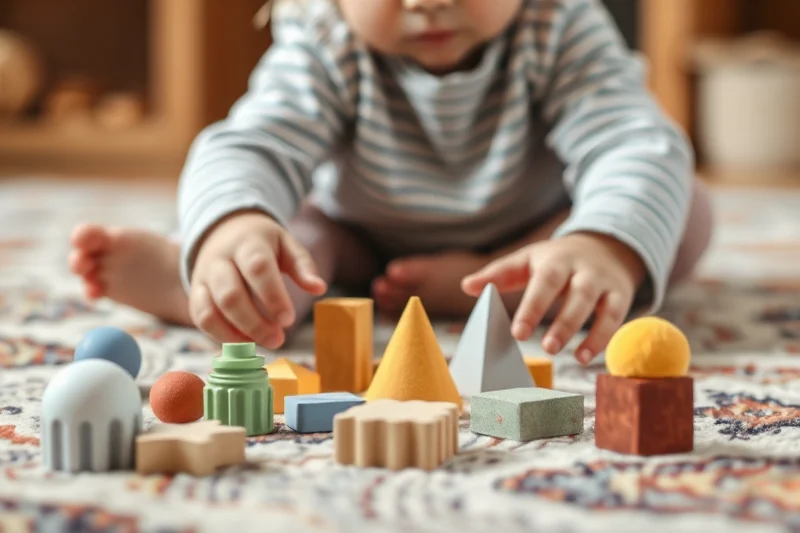
I started by inviting my daughter to help with simple tasks like wiping the table, pouring water, and folding napkins. At first, she spilled everything, but these small failures were part of the learning process. I never stepped in to do it for her — even if it took longer.
Over time, she became more confident in these tasks and even began offering to help with things like setting the table or organizing her toys. These moments, though small, built a sense of pride and competence that I hadn’t anticipated.
The best part? These skills are transferable. The coordination she developed by carrying a tray has helped her with writing, and the patience she learned from wiping a table has translated into better focus during other activities.
Practical life skills are the foundation of a child’s independence.
Related: Fast start montessori at home
Incorporating Nature into Everyday Learning
I started by taking our walks more frequently and bringing small natural items like leaves, stones, and flowers back home. We placed them in a glass jar on our kitchen table, creating a living museum of sorts. My daughter would spend hours examining them, asking questions, and even making her own drawings of what she saw.
We also started a small indoor garden, where she could water plants and watch them grow. This was a hands-on way to teach responsibility and the cycle of life. She learned to name the plants, track their progress, and even took on the role of 'plant caretaker' for a few weeks.
By connecting with nature, my child developed a deeper respect for the environment and a sense of wonder that is hard to replicate with any other method. It’s a way to bring the outside in, making learning feel both grounded and meaningful.
Collect natural items on walks and display them in a visible place. This encourages observation, curiosity, and a connection with the natural world.
“The first time I saw my daughter pick up a tiny wooden spoon and try to stir a bowl of water, I knew Montessori principles…”— Thetraylife editors
Related: What is a montessori toddler bed
The Power of Observation in a Montessori Home
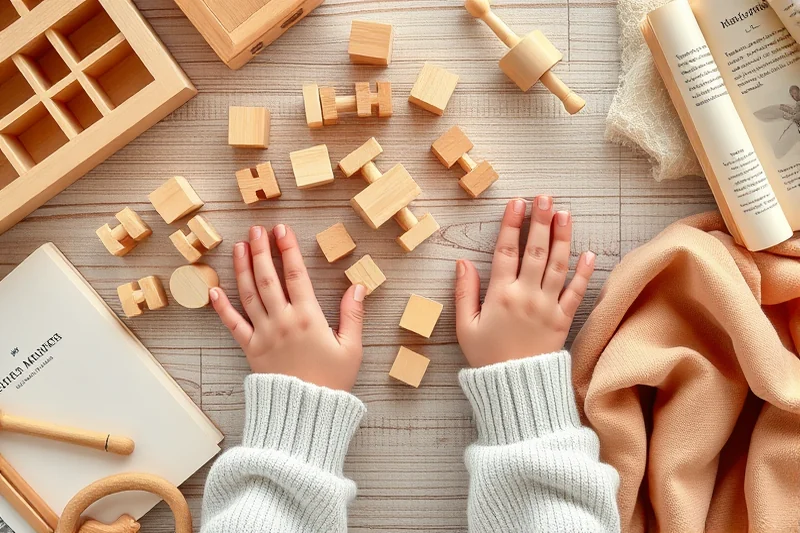
I learned to watch my daughter closely without trying to direct her. Instead of asking, 'What are you doing?' I would simply observe and wait for her to explain her own process. This taught me patience and gave me insight into her thinking.
One day, I saw her stacking blocks in a pattern that looked familiar. When I asked, she said, 'I’m building a bridge for the cars.' This was a moment of pure discovery — she wasn’t following a lesson, but she was learning through play.
Observing without interference helps build trust and fosters a child’s natural curiosity. It’s a way to support their learning without imposing our own expectations on them.
Related: Toddla montessori busy board
Incorporating Language Through Everyday Moments
I started using descriptive language during our routines, like saying, 'We’re opening the jar with the lid that twists like a screw.' This helped her learn new vocabulary and understand the mechanics of objects.
We also read aloud during our daily walks and meals, using the environment as a context for learning. My daughter began asking questions about colors, shapes, and even the names of the people we met, all of which became part of her language development.
By making language a part of everything we do, we’ve created a home where learning feels natural and effortless — and my daughter has become a voracious reader and speaker.
Related: Montessori educational toys for toddlers
The Role of Rhythm and Routine in a Montessori Home
We’ve established a daily rhythm that includes specific times for meals, play, and rest. This helps my daughter understand what to expect and feel more in control of her environment.
For example, we have a set time each day for our 'practical life' activities, which include wiping, pouring, and sweeping. These moments are not rushed and are treated as sacred parts of our day.
This consistency has helped her develop a sense of security and predictability, which in turn has made her more confident and focused during other parts of her day.
Rhythm and routine create a calm, predictable environment for learning.
Related: Montessori for bed
Adapting Montessori Principles for Different Ages and Needs
When my daughter turned three, we introduced more complex materials like the Montessori number rods and letter cards. These allowed her to explore math and language in a hands-on way, while still maintaining the freedom to choose what she wanted to do.
I also started incorporating more sensory activities as she grew, like texture boards and color mixing. These materials helped her develop fine motor skills and a deeper understanding of the world around her.
The key has been to stay flexible and observe what she’s interested in. By following her lead, we’ve been able to create a learning environment that’s both engaging and meaningful for her.
Using Sensory Exploration to Enhance Cognitive Development
Introduce sensory bins filled with items like rice, beans, or sand, and add objects such as small wooden shapes or plastic animals. I used a 5-gallon bucket filled with dried beans and added 10 small wooden letters for tactile learning. My 3-year-old spent 20 minutes each day sorting and exploring, which improved his fine motor skills and letter recognition.[1]
Create a sensory table with materials like water, playdough, or natural items like pinecones and leaves. I set up a table with 3 different textures and 2 different colors, and my child learned to categorize by touch alone, which boosted his problem-solving abilities. This activity took only 15 minutes a day but had a noticeable impact on his focus and curiosity.[2]
Incorporate sensory walks by taking your child outside and asking them to find items with specific textures or colors. During a 45-minute walk, my child found 7 smooth stones and 3 rough leaves, which led to a natural discussion about nature and science. This simple practice built observation skills and a love for learning through exploration.[3]
🌱 Gentle Montessori
A relaxed, child-led approach that focuses on observation and freedom of choice.
⚡ Fast-Track Montessori
A structured approach with specific learning goals and timelines, ideal for busy parents.
✈️ Travel Montessori
A portable, low-stress version of Montessori that can be adapted to any environment, even on the go.
👨👦 Montessori for Multiples
A tailored approach that allows for individualized learning while still fostering shared experiences among siblings.
🔄 Regression Reset Montessori
A restructured approach that helps children who have fallen behind or need a new kind of learning environment.
| The mistake | Why it happens | The fix |
|---|---|---|
| Trying to force a rigid Montessori structure too early. | Children need time to explore and develop naturally, and forcing a structure can lead to frustration and disinterest. | Start with small, child-led activities and gradually introduce more structure as they become comfortable with the principles. |
| Using too many screens or commercial products. | These can detract from the natural, hands-on learning that Montessori emphasizes and reduce a child’s engagement with the environment. | Opt for open-ended, natural materials that encourage creativity and exploration without the need for screens or flashy toys. |
| Not observing the child’s progress and needs. | Montessori is about following the child’s lead, and failing to observe can lead to missed opportunities for growth and connection. | Spend time observing your child during their activities and use these insights to guide your approach. |
| Making the environment too cluttered or overwhelming. | A cluttered environment can be distracting and make it hard for a child to focus on learning. | Keep the space simple and organized, using only a few high-quality materials that are accessible and engaging. |
Montessori At Home Curriculum Tips
Common Questions
How can I incorporate Montessori principles without spending a lot of money?
What are the key differences between Montessori at home and a Montessori school?
How do I know if my child is ready for Montessori-style learning?
Can Montessori be adapted for children with special needs?
References
- Chenal Valley Montessori School Elementary Middle School ... (arksped.ade.arkansas.gov)
- Montessori: Evidence Based Reading Curricula (azed.gov)
- CAPITOL HILL MONTESSORI AT LOGAN - Commission of Fine Arts (cfa.gov)
- Capitol Hill Montessori at Logan Education Campus - | dgs (dgs.dc.gov)
Cite this guide
Thetraylife (2026). Montessori at Home Curriculum Tips for Everyday Learning. https://thetraylife.com/montessori-at-home-curriculum-tips/
Feel free to cite or share this guide.
Montessori Tray Idea Generator
Age-filtered Montessori tray ideas from household items.
Open it free →