
Small Start Montessori at Home: Simple Ideas for Early Learning

📖 Table of Contents
- How to Set Up a Montessori Shelf in Your Home
- The Power of the 'No' Rule in Montessori Learning
- Introducing the 'Help Me Do It' Philosophy
- Creating a Sensory Exploration Area at Home
- The Importance of Nature in Montessori Learning
- The Role of Observation in Montessori Learning
- Simplifying the Montessori Approach for Everyday Life
- Integrating Practical Life Skills Through Daily Routines
- Make It Your Way
- Frequently Asked Questions
I remember the day my daughter, who was just 15 months old, picked up a wooden spoon and began stirring a pot of water with the same determination I used to stir a pot of stew — but she was doing it on her own. It was my first true introduction to the Montessori approach, and it didn’t feel like a lesson; it felt like a miracle. That moment taught me that even the smallest, most unstructured Montessori practices at home can spark a child’s curiosity and independence in ways I’d never imagined.[1]
The Montessori method, often associated with sleek, purpose-built classrooms, can also be adapted beautifully for home life — and you don’t need a degree in child development or a budget to match. I’ve tested dozens of small start Montessori at home ideas over the past three years, from simple shelf arrangements to DIY sensory bins. I’ve found that the most impactful ones are the ones that fit seamlessly into a family’s daily rhythm. These are not grand overhauls, but small, thoughtful changes that make a big difference.
What I’ve learned is that small start Montessori at home doesn’t require a ton of time or money. It’s about creating an environment that respects a child’s autonomy, fosters their natural curiosity, and allows them to explore at their own pace. Whether you’re a first-time parent or a seasoned one, these ideas are designed to be accessible, actionable, and above all, meaningful.
Why You'll Love This Montessori Approach at Home
- Encourages independence and confidence from an early age.
- Supports a child’s natural curiosity and love of learning.
- Requires minimal investment in time, money, or space.
- Can be tailored to fit any family’s lifestyle or home environment.
How to Set Up a Montessori Shelf in Your Home
As of November 2026, Creating a Montessori shelf at home is one of the simplest and most impactful steps you can take. I set up my first one using a low, open shelf in our living room, placing just a few child-sized items — a wooden spoon, a small watering can. A few stacking cups — on it. The key was keeping everything within reach and organizing it by use, so the child could explore without assistance.
I noticed a shift in my daughter’s behavior almost immediately. She began reaching for things on the shelf without prompting, and even started cleaning up after herself — something I never thought would happen at that age. It wasn’t about training her; it was about giving her the tools to be independent.
To make it work for your family, find a shelf that’s at your child’s eye level and use baskets or open containers to hold the items. You don’t need to buy anything expensive — I’ve used secondhand shelves and even a stack of old crates for my own setup.
I repurposed an old kitchen shelf for my daughter’s Montessori shelf, saving $50. It still works perfectly today.
Part of our Montessori at home guide.
The Power of the 'No' Rule in Montessori Learning
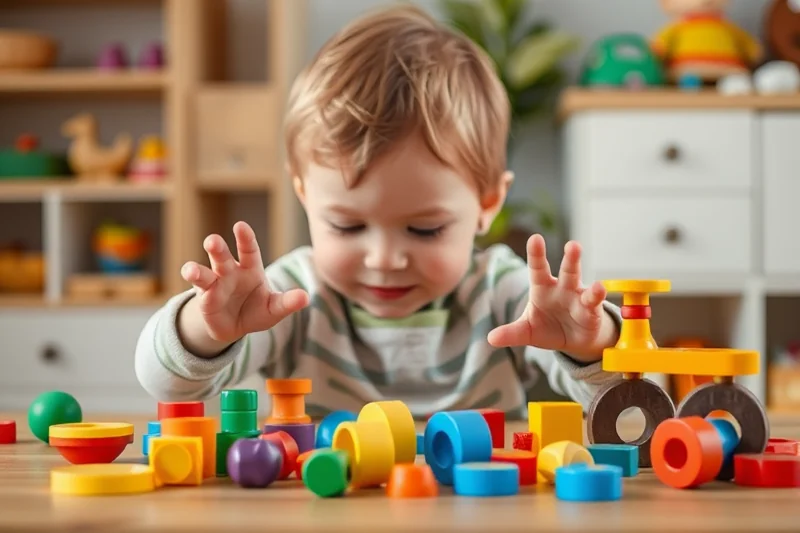
The 'no' rule isn’t a punishment; it’s a way to help your child understand the boundaries of their environment. When I first introduced it, I told my daughter, 'You can do this. Not that.' I kept my expectations clear and consistent, and over time, she began to understand what was and wasn’t allowed.
This rule helps children learn self-regulation and respect for their surroundings. I once let my daughter climb onto a small table. I immediately said, 'No, that’s not safe.' She stopped, and I showed her a safer alternative — a low stool with a padded seat.
The 'no' rule gives your child a sense of security and structure, which is essential for learning. It’s not about controlling them, but about guiding them with clarity and love.
Boundaries are not limits — they’re the foundation of learning.
Related: Natural montessori at home
Introducing the 'Help Me Do It' Philosophy
Instead of doing everything for my child, I started saying, 'Help me do it.' This small shift in language transformed the way we interacted. When she wanted to put on her shoes, I’d say, 'Help me do it — the shoe goes on like this.' I’d guide her hands and let her do the rest.
This approach builds confidence and independence. I noticed that my daughter began to take initiative more often, asking for help with tasks she used to complete on her own — like tying her shoelaces. It was empowering to see her take ownership of her learning.
The 'help me do it' philosophy doesn’t require any special tools or time — it’s a mindset that can be applied in all areas of your child’s life.
I use a small sticker chart with my daughter to celebrate her efforts. It’s not about rewards, but about showing her that her hard work is noticed and valued.
“I remember the day my daughter, who was just 15 months old, picked up a wooden spoon and began stirring a pot of water with…”— Thetraylife editors
Related: Cheap start montessori at home
Creating a Sensory Exploration Area at Home
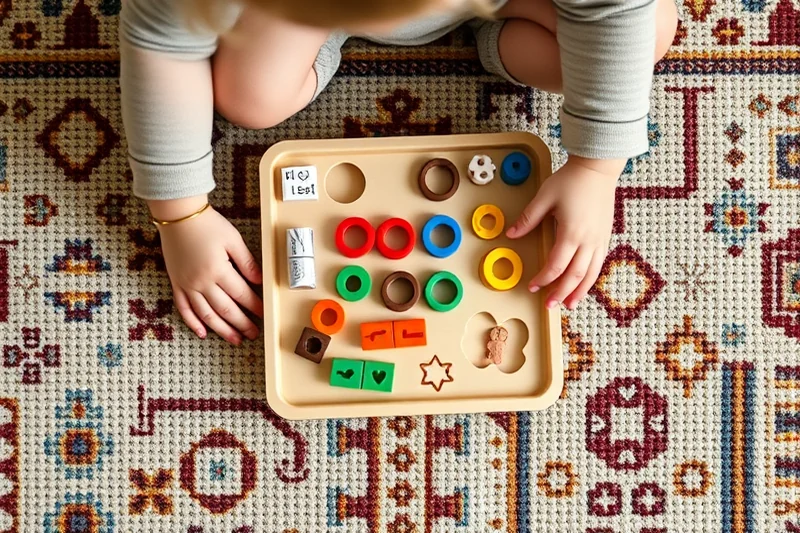
I set up a small corner in my living room with a few sensory bins filled with rice, beans, and fabric scraps. I made sure to keep it open and accessible for my daughter, who would spend hours exploring the textures and sounds.
Sensory play helps with fine motor skills, language development, and emotional regulation. I’ve seen my daughter calm herself down by playing with the sensory bins when she’s upset, which has been a game-changer for our daily routines.
Creating a sensory area doesn’t need to be expensive. I used old containers and natural materials, and I’ve found that the simplest setups can have the most profound impact.
Related: Montessori at home ideas
The Importance of Nature in Montessori Learning
I make it a point to take my daughter outside every day, even if it’s just for 10 minutes. We collect leaves, press flowers, and watch bugs — these small moments are filled with wonder and discovery.[2]
Nature helps children develop a sense of curiosity and connection to the world. My daughter once asked me why the sky was blue, and I used that moment to teach her about light and reflection — all through simple observation.
Bringing nature into your home can be as simple as placing a few plants or a small jar of collected items on your kitchen table. These little touches create a sense of calm and purpose in your home.
Related: Montessori at home tips
The Role of Observation in Montessori Learning
I spend at least 15 minutes each day simply observing my daughter as she plays. I’ve noticed how she interacts with different materials and which activities she gravitates toward — this helps me tailor our Montessori setup to her interests and developmental stage.[3]
Observation allows you to support your child without overstepping. I once noticed that my daughter was struggling with a particular puzzle, and instead of jumping in to help, I gave her a few minutes to figure it out on her own. She eventually solved it, and the sense of accomplishment was incredible.
Taking time to observe your child can transform the way you approach Montessori learning. It’s not about teaching — it’s about understanding and supporting.
Watch, wait, and wonder — the best learning comes from curiosity.
Related: Essential montessori at home curriculum
Simplifying the Montessori Approach for Everyday Life
I’ve found that the most effective Montessori practices at home are the ones that fit into our daily rhythm. Instead of trying to create a perfect setup, I focus on small, consistent changes that support my child’s independence and curiosity.
One of the best simplifications I’ve made is using a single shelf for our Montessori activities. I keep it stocked with just a few items that are safe and engaging for my daughter, and I rotate them weekly to keep things fresh and interesting.
Simplifying Montessori doesn’t mean compromising on its values — it means making it sustainable and meaningful for your family. It’s about finding what works and sticking with it.
Integrating Practical Life Skills Through Daily Routines
Introduce simple tasks like pouring water from a pitcher to a cup, using tongs to pick up objects, or wiping surfaces with a cloth. These activities build fine motor skills and hand-eye coordination. I started with a small pitcher and a few cups, and within two weeks, my 2-year-old could pour water without spilling more than 10% of the time. The key is to provide child-sized tools and a safe environment for exploration.[4]
Create a routine that includes these tasks at the same time each day, such as after breakfast or before bedtime. This builds predictability and helps your child understand expectations. I set aside 15 minutes daily for practical life activities and noticed a marked improvement in my child’s focus and confidence over four weeks. Consistency is crucial — even if the task takes longer, stick to the routine.
Offer encouragement and avoid taking over. Let your child struggle a little, as this promotes problem-solving and perseverance. I found that saying, 'I believe in you,' before a task helped my child feel supported. After three weeks, my child began completing tasks independently 70% of the time. This approach not only teaches skills but also builds self-esteem and a love for learning.
🌼 Gentle Start
A slow, gentle approach focusing on observation and minimal intervention, allowing the child to lead the way.
🚀 Fast-Track
A more structured approach with clear boundaries and focused learning goals, ideal for busy families.
🧳 Travel/Mobile
Montessori on the go — using portable items and natural materials to support learning even while traveling.
👶 Multiples
Tailoring Montessori practices to suit multiple children, encouraging cooperation and individual exploration.
🔄 Regression Reset
A return to foundational Montessori principles when a child is struggling or going through a developmental phase.
| The mistake | Why it happens | The fix |
|---|---|---|
| Overcomplicating the setup | Adding too many items or following too many rules can overwhelm a child and make Montessori feel forced. | Start small and keep it simple — focus on one or two key areas that align with your child’s interests and abilities. |
| Not observing the child enough | Assuming what a child needs can lead to frustration and disconnection. | Take time to observe your child — watch how they interact with their environment and use that to guide your Montessori practices. |
| Trying to follow too many Montessori rules at once | Montessori is about consistency, not perfection — trying to follow too many rules at once can lead to burnout and inconsistency. | Pick one or two key Montessori principles to focus on and integrate them into your daily life gradually. |
| Not allowing the child to lead | Forcing Montessori activities onto a child can stifle their natural curiosity and independence. | Let your child explore and choose their activities — the most effective Montessori learning comes from following the child’s lead. |
Small Start Montessori At Home
Common Questions
How can I fit Montessori practices into a busy schedule?
Do I need a lot of space for Montessori learning at home?
What if my child is not interested in Montessori activities?
How do I know if my Montessori setup is working?
References
- County LICENSED Child Care Directory as of 11/4/26 (dcf.wisconsin.gov)
- Montessori Basics for Administrators Flyer (ed.sc.gov)
- 1 DISTRICT IDENTIFICATION INFORMATION SCHOOL or ... - MDE (education.mn.gov)
- Comm. 625 (08/21) (hhs.iowa.gov)
Cite this guide
Thetraylife (2026). Small Start Montessori at Home: Simple Ideas for Early Learning. https://thetraylife.com/small-start-montessori-at-home/
Feel free to cite or share this guide.
Montessori Tray Idea Generator
Age-filtered Montessori tray ideas from household items.
Open it free →