
Fast Start Montessori at Home: Tips for Early Learning

📖 Table of Contents
- What is a Fast Start Montessori at Home?
- How to Create a Montessori-Friendly Environment
- The Benefits of a Montessori Approach at Home
- What to Avoid When Setting Up a Montessori Home
- How to Support Your Child’s Montessori Journey
- How to Keep Your Montessori Space Engaging
- What to Do If Your Child Seems Uninterested
- Make It Your Way
- Frequently Asked Questions
When my son turned two, I noticed how he would stare at the kitchen counter for hours, fascinated by the way the light reflected off the wooden spoon. It was then I realized that the Montessori principles I’d read about online weren’t just for classrooms — they could work at home, too. I started small, rearranging shelves to his eye level, letting him explore with real tools. Within a few days, he was independently pouring water, sorting blocks, and even wiping up spills. It was a revelation: Montessori wasn’t just about learning — it was about giving kids the freedom to learn in their own way, and in their own time.[1]
What I didn’t expect was how much easier it would make my life. By letting him choose what he wanted to do, when he wanted to do it, I found myself with more time to breathe, more patience, and more joy in his daily routine. Montessori at home didn’t just help him grow — it reshaped how I saw parenting. It’s not about being in control, but about creating a space where he can explore, fail, and succeed on his own terms. That’s the real magic of a 'fast start Montessori at home'.[2]
Implementing Montessori in our home didn’t require a lot of money or a big house. It didn’t even need a lot of time — just a few thoughtful changes. My son’s first shift from being a passive observer to an active participant happened in just three days. I didn’t know it then, but that was the beginning of a journey that would transform our family’s daily rhythm, his independence, and my confidence as a parent. If you’re looking for a gentle, effective way to start your child’s learning journey, this is it.[3]
Why You'll Love This Fast Start Montessori at Home Approach
- Encourages independent learning from a young age
- Builds confidence through self-directed exploration
- Requires minimal resources and time to set up
- Creates a calm, focused environment for your child
What is a Fast Start Montessori at Home?
As of November 2026, it’s not about structured lessons or flashcards. Instead, it’s about arranging your home so your child can move freely, choose what they want to do, and learn through hands-on experiences. I noticed the biggest shift when I moved my son’s toy shelf to his eye level — suddenly, he wasn’t just looking at things — he was reaching for them, moving them. Figuring out how they worked on his own.[4]
The key is to let go of the idea that learning has to be planned. It’s about creating a space that invites curiosity. For example, I left a watering can and small plants on a shelf. Within minutes, my son was watering them, learning about responsibility, and even asking questions like, 'Is the plant thirsty?' I didn’t have to teach him — he was learning by doing.[5]
This approach doesn’t require a lot of planning or resources. It can be done with just a few changes, like adjusting furniture heights or offering real tools for real tasks. The result? A child who feels capable, engaged, and excited to learn — all in the comfort of their own home.
Lower shelves, tables, and storage units so your child can reach them unassisted. This encourages independence and makes learning accessible from day one.
Part of our Montessori at home guide.
How to Create a Montessori-Friendly Environment

I began by decluttering my home and organizing everything into clearly defined spaces. For example, I set up a small 'work area' near the kitchen with a low table, real cleaning tools, and a watering can. This space became his favorite spot — he’d clean up, water plants, and even sort laundry. It was incredible to see how naturally he transitioned from a passive observer to an active participant.
It’s important to keep the environment simple and predictable. Too many choices can overwhelm a child, but too few can limit their creativity. I found that having two or three clearly labeled containers with tools like brushes, small brooms, and cleaning rags helped him focus and stay engaged. He would often choose one task, complete it, and move on to the next — all without any prompting from me.
One of the most important rules I implemented was that if he wanted something, he had to ask for it. This taught him to use language and communicate his needs. It wasn’t always easy — there were days when he’d cry or throw a tantrum — but over time, he learned that asking was the way to get what he wanted. It was a small change that made a huge difference in his ability to express himself.
A simple space with clear boundaries can turn a child into an explorer.
Related: Diy montessori at home for beginners
The Benefits of a Montessori Approach at Home
One of the biggest advantages I noticed was how my son became more confident. He started making decisions on his own, like choosing which task to do first or what he wanted to explore. He also developed a strong sense of responsibility, as he began to see himself as a capable member of the family. It wasn’t just about learning — it was about feeling valued and empowered.
Another benefit was the way his curiosity grew. He asked more questions, wanted to know how things worked, and even started experimenting with simple cause-and-effect tasks. For example, he’d drop blocks from different heights to see how far they rolled or try to stack them as high as possible. These moments of discovery were priceless, and they didn’t require any formal instruction — just time and space.
Perhaps the most unexpected benefit was how it changed the way I parented. I found myself more patient, more observant, and more in tune with his needs. I stopped trying to direct his learning and started supporting it — and that made all the difference.
Use simple, clear labels on containers, shelves, and tools. This helps your child recognize objects and build literacy skills from an early age.
“When my son turned two, I noticed how he would stare at the kitchen counter for hours, fascinated by the way the light reflected off…”— Thetraylife editors
Related: Montessori at home for 3 year old
What to Avoid When Setting Up a Montessori Home
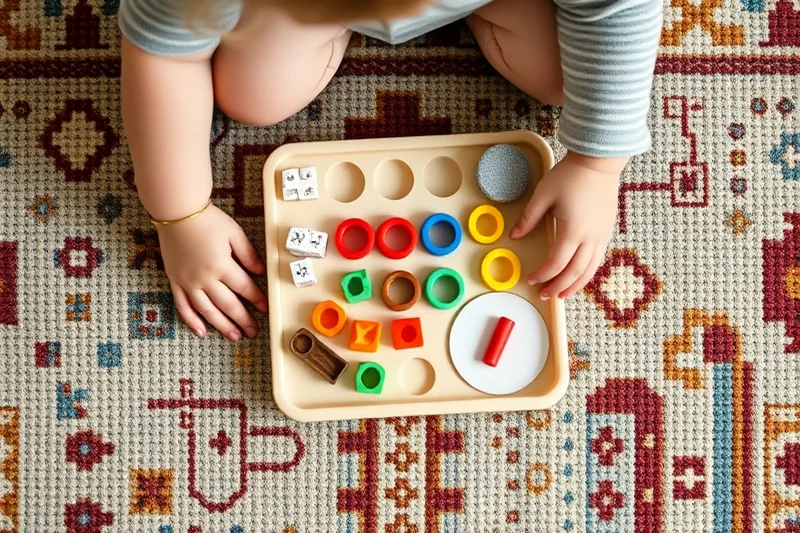
One of the biggest mistakes I see is overcomplicating the space. It’s easy to want to fill a room with too many toys, tools, or learning materials, but this can be overwhelming for a child. Instead, focus on a few, high-quality items that encourage exploration and learning. I learned this the hard way when I filled a shelf with too many items — it turned into a sensory overload, and my son would just stare at it without engaging.
Another mistake is leaving everything within reach. While it’s important to give your child freedom, it’s also important to set clear boundaries. I made the mistake of leaving all the cleaning tools on the table. One day, my son pulled out a small broom and swept the floor — it was adorable, but it also left a mess. I realized that I needed to be more intentional about what items were available and when.
The rule I finally settled on was that if something was not safe or appropriate, it wasn’t on the shelf. This helped my son understand what was allowed and what wasn’t — and it kept the space both safe and inviting.
Related: What is a montessori school definition
How to Support Your Child’s Montessori Journey
One of the most important things I learned was to observe without interfering. I would watch him from a distance as he worked on tasks, and only step in if he needed help. I found that he often figured things out on his own — like how to use a small mop or how to sort blocks by size. This taught him to be persistent and to trust his own abilities.
I also made a point to praise his efforts rather than his outcomes. Instead of saying, 'You did a great job cleaning up,' I would say, 'I saw how hard you worked to pick up all the blocks.' This helped him focus on the process rather than the result. It boosted his self-esteem in a meaningful way.
Another key part of the journey was allowing him to take breaks when he needed to. I noticed that when he was overstimulated or frustrated, he’d walk away from a task — and that was okay. I let him take a step back, and then he’d often return to the task with a fresh perspective. This taught him about self-regulation and the importance of taking a break when needed.
Related: Montessori at home curriculum mistakes
How to Keep Your Montessori Space Engaging
I found that my son’s interest in a task would fade after a few days. To keep things interesting, I would introduce new tools or change the layout of the space slightly. For example, I might rotate the types of cleaning tools available or add a new plant to water. This helped keep the space fresh and exciting without overwhelming him.
I also made sure to introduce new challenges gradually. At first, I would only offer one or two tasks, like watering plants or sorting blocks. As he became more confident, I’d introduce more complex tasks, like using a small vacuum or organizing books. This helped him build skills progressively and stay engaged for longer periods.
The key was to strike a balance between routine and novelty. Too much change could be confusing, but too much repetition could be boring. I found that a consistent structure with occasional surprises kept him engaged and motivated to learn.
A little change keeps a child curious, a little routine keeps them grounded.
Related: In home montessori daycare for beginners
What to Do If Your Child Seems Uninterested
There were times when my son would look at the Montessori space and walk away, seemingly uninterested. I realized that not every child is ready for independent learning at the same time. Some children may need more time to develop their skills, while others may be ready to explore earlier. It’s important to be patient and not force the process.
To reignite his interest, I would introduce new tools or change the environment slightly. For example, I might bring out a new set of sorting cups or move the shelf to a different part of the room. I also made sure to offer a variety of options so he could choose what he wanted to do — sometimes he preferred cleaning, sometimes he preferred sorting. Sometimes he just wanted to sit and watch.
I found that allowing him to take the lead, rather than pushing him toward a specific task, was the most effective way to keep him engaged. If he wasn’t interested in a particular task, I wouldn’t push — I’d wait, observe, and offer new options when he was ready.
🌿 Gentle Montessori
Ideal for babies and toddlers who need time to explore at their own pace with minimal guidance.
🚀 Fast-Track Montessori
A more structured approach for older toddlers who are ready to take on more complex tasks and responsibilities.
✈️ Travel Montessori
Perfect for families on the move, this variation uses portable tools and minimal space to keep the Montessori spirit alive on the go.
👶 Montessori for Multiples
Tailored for siblings, this variation encourages shared learning and independent exploration for multiple children in one space.
🔄 Montessori Regression Reset
A reset approach for children who have lost their Montessori momentum, using new tools and reorganized spaces to reignite their interest.
| The mistake | Why it happens | The fix |
|---|---|---|
| Cluttering the Montessori space with too many items | This can overwhelm a child and make it harder for them to focus on one task at a time. | Limit the number of items to a few clearly labeled, high-quality tools that encourage exploration. |
| Forcing a child to engage with Montessori activities before they are ready | This can lead to resistance, frustration, and a lack of interest in the space. | Observe your child’s cues and introduce activities gradually, allowing them to take the lead. |
| Leaving everything within reach without boundaries | This can lead to unsafe situations and a lack of structure in the learning environment. | Set clear boundaries by only offering items that are safe and appropriate for your child’s developmental stage. |
| Over-interfering with your child’s independent tasks | This can prevent them from learning through trial and error and may reduce their confidence. | Observe from a distance and only step in when necessary. Let them experience the process of learning on their own. |
Fast Start Montessori At Home
Common Questions
How long does it take for a child to adjust to a Montessori home environment?
Do I need to buy a lot of special Montessori tools for my home?
Can a Montessori home be created in a small apartment or limited space?
How do I know if my child is ready for a Montessori approach at home?
References
- Nationwide UVA-Led Study Finds Montessori Preschool... (as.virginia.edu)
- A Longitudinal Efficacy Study of the Montessori Preschool Model on ... (ies.ed.gov)
- View of To What Extent Do Parents of Montessori-Educated Children ... (journals.ku.edu)
- Effects of Montessori Education on the Academic, Cognitive ... - PMC (pmc.ncbi.nlm.nih.gov)
- A Qualitative Case Study of Montessori Approaches to Learning ... (scholarworks.uni.edu)
Cite this guide
Thetraylife (2026). Fast Start Montessori at Home: Tips for Early Learning. https://thetraylife.com/fast-start-montessori-at-home/
Feel free to cite or share this guide.
Montessori Tray Idea Generator
Age-filtered Montessori tray ideas from household items.
Open it free →