
What Is Montessori Education About

📖 Table of Contents
- What is Montessori Education About, Really?
- The Montessori Classroom: A World of Possibilities
- The Power of the Child’s Own Will
- Respect for the Environment and Others
- The Role of the Teacher in a Montessori Classroom
- Montessori Education and Long-Term Confidence
- Montessori Education and the Power of Routine
- Make It Your Way
- Frequently Asked Questions
When my son turned three, I watched him spend 45 minutes at the kitchen table, arranging wooden blocks in precise rows. He didn’t ask for help, didn’t get frustrated, and didn’t even notice my presence. It was the first time I realized how deeply the principles of Montessori education could shape a child’s development. 'What is Montessori education about?' I asked myself that day. It took me nearly a year to find the answer — not just in books, but in the way my son began to think, move, and interact with the world.[1]
Montessori education is not a brand, a trend, or a set of classroom decorations. It is a philosophy that believes in the child’s innate ability to learn, explore, and grow — not through rigid curriculums, but through carefully designed environments that invite curiosity. I was skeptical at first. After a week in a Montessori classroom, I saw how children as young as two could walk confidently to the sink, pour water, and wash their hands — all without a single instruction from a teacher. That’s when I began to understand: Montessori education is about freedom, respect, and the power of the child’s own will.[5]
What is Montessori education about? It's about giving children the tools to become independent, confident, and self-directed learners. I remember watching my daughter, who had struggled with separation anxiety, slowly begin to walk into school each morning on her own. She didn’t need a sticker or a reward — she just wanted to do it herself. That’s the Montessori way: not about pushing kids forward, but about letting them find their path. And it’s not just about school. It’s about life, growth, and the kind of confidence that lasts well into adulthood.
Why You'll Love This Approach to Education
- Encourages independence and self-directed learning from an early age.
- Builds deep, long-lasting confidence through hands-on exploration.
- Focuses on the child’s unique pace and learning style, not a one-size-fits-all model.
- Teaches respect for the environment, others, and oneself through consistent, meaningful routines.
What is Montessori Education About, Really?
As of November 2026, at its core, Montessori education is not just a teaching method — it's a way of seeing the child as a capable, curious being who is naturally driven to learn. I remember the first time I walked into a Montessori classroom: there was no shouting, no chaotic play, no overstimulating colors or distractions. Instead, there was a quiet hum of activity, with children moving with purpose across the room, choosing their own work, and taking ownership of their learning.[2]
Montessori classrooms are designed to support the child's development at every stage. For example, a child might spend an entire morning working on a puzzle, or choosing to read a book independently. The teacher doesn’t interrupt — they observe, and when the time is right, they may offer a quiet suggestion or ask a gentle question. This kind of environment builds trust and allows the child to feel in control of their learning.
What is Montessori education about? It's about creating a space where the child is not just a student, but an active participant in their own growth. I’ve seen children who once struggled with attention or focus begin to find their rhythm in a Montessori classroom. I’ve seen parents feel more at ease knowing their child is being nurtured in a way that honors their unique strengths.
Set up a small table with child-sized items like spoons, bowls, and books. Let your child choose what they want to do — no instructions, no interruptions. This builds confidence and independence from a young age.
Part of our Montessori at home guide.
The Montessori Classroom: A World of Possibilities
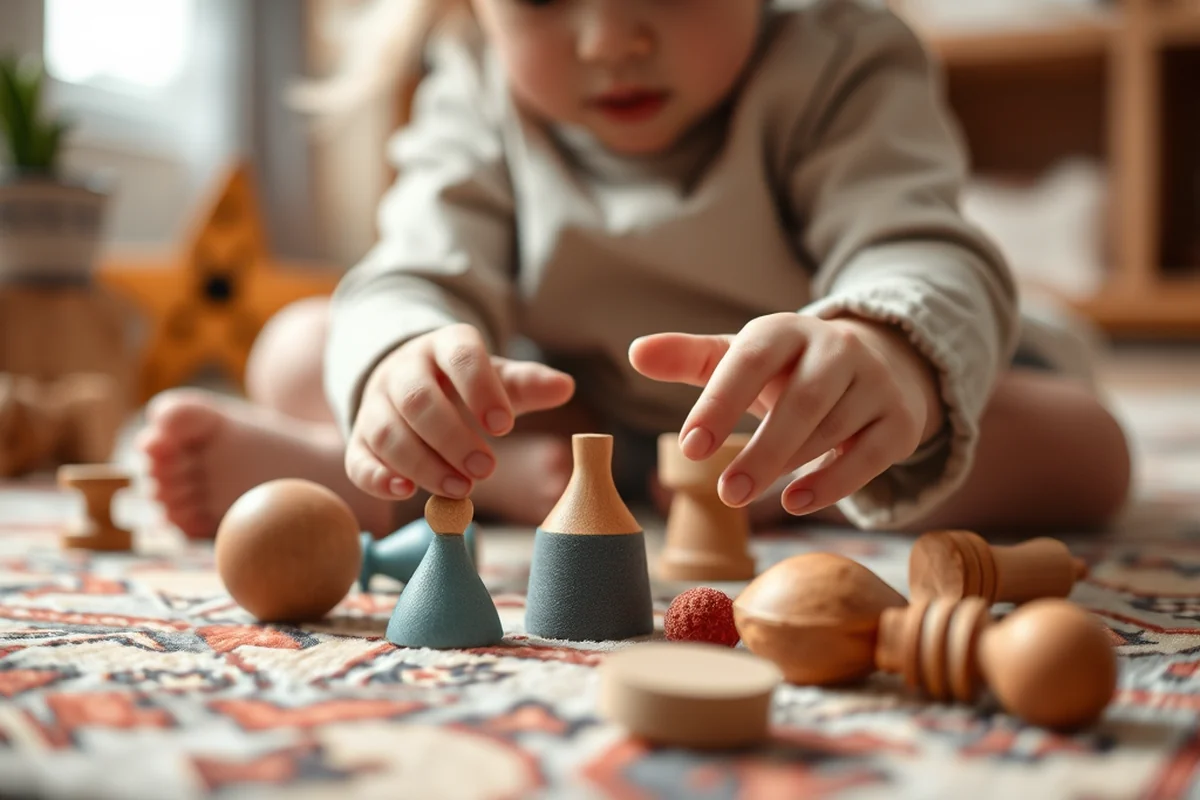
One of the first things I noticed about a Montessori classroom was the amount of time and thought that went into the layout. Everything is accessible to the child — from the shelves to the sink. The materials are arranged by subject, and each piece has a specific purpose. For example, there are shelves with different types of puzzles, blocks, and books, and all of them are open for the child to explore.
I once watched a child spend 20 minutes arranging and then disassembling a set of wooden beads. The teacher didn’t offer help — they just smiled and said, 'Let me know if you need anything.' This kind of support is crucial in Montessori education, as it allows the child to take their time, make mistakes. Find their own way to a solution.[3]
What is Montessori education about? It's about giving the child the freedom to explore, move, and learn in a way that feels natural to them. When I first tried to replicate this at home, I was surprised by how much my child's focus and engagement increased. The classroom isn’t just a place to learn — it’s a place where the child can be themselves, without pressure or expectation.
The classroom is not a place of control — it's a place of possibility.
Related: What is a montessori school definition
The Power of the Child’s Own Will
One of the most striking aspects of Montessori education is the way it empowers the child to make choices — not just about what to learn, but how to learn it. I remember watching a child choose to work on a math puzzle rather than play with a toy. The teacher didn’t push or encourage — they simply gave the child space to decide.
This kind of environment teaches the child that learning is a choice, not a chore. It also builds a deep sense of self-motivation. When my daughter was in a Montessori school, she began to take more initiative in her learning. She would ask questions, explore new materials, and even help her classmates when needed.
What is Montessori education about? It's about trusting the child's own will and letting them take the lead in their learning. This approach not only builds confidence, but also teaches the child to be self-directed, curious, and responsible for their own growth.
Give them options — like a choice between reading, building, or drawing. This teaches them that learning is a personal, meaningful process, not something that’s forced upon them.
“When my son turned three, I watched him spend 45 minutes at the kitchen table, arranging wooden blocks in precise rows.”— Thetraylife editors
Related: Montessori at home curriculum mistakes
Respect for the Environment and Others
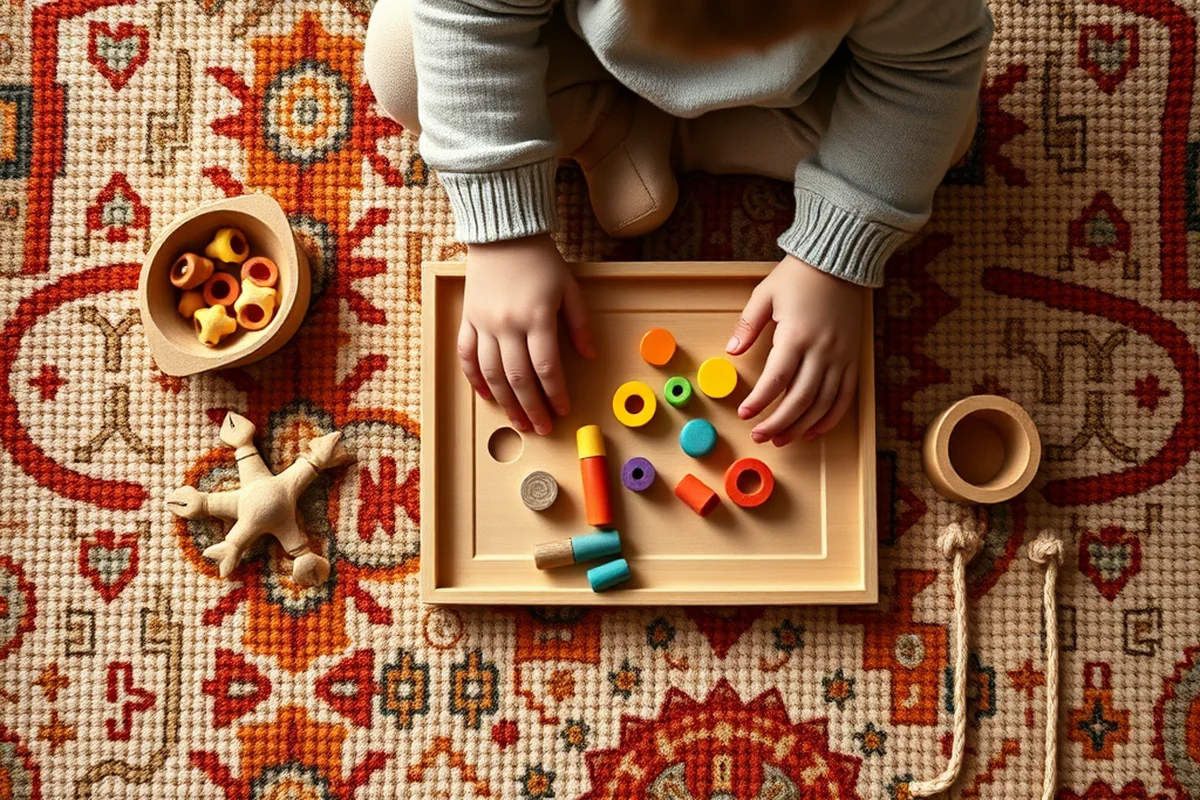
One of the most beautiful aspects of Montessori education is the way it teaches children to care for their surroundings. I remember watching a child gently place a block back on the shelf after using it. The teacher didn’t have to remind them — they just knew it was the right thing to do.
This kind of respect extends to others as well. In Montessori classrooms, children are taught to listen, wait their turn, and treat others with kindness. I’ve seen children as young as three years old helping their peers, offering assistance without being asked, and showing a deep sense of empathy.
What is Montessori education about? It's not just about learning — it's about developing a strong sense of self, respect for others, and a deep connection to the world around them. These values are not taught through lectures or rules, but through consistent, meaningful actions.
Related: In home montessori daycare for beginners
The Role of the Teacher in a Montessori Classroom
In Montessori education, the teacher's role is to observe, support, and guide, not to direct or control. I remember watching a teacher sit quietly in the corner of the classroom, watching a child work on a puzzle for nearly an hour without saying a word. The child didn't seem to need help — they just focused on their task.
When the child finally looked up, the teacher offered a gentle question: 'What did you learn today?' This simple interaction showed how much trust the teacher placed in the child's ability to learn on their own. The teacher didn’t correct or rush the child — they simply gave them space to reflect.
What is Montessori education about? It's about creating a space where the child is the center of the learning process, and the teacher is there to support, not to control. This kind of relationship builds deep trust and encourages the child to take ownership of their learning.
Related: Beginner montessori activities at home
Montessori Education and Long-Term Confidence
One of the most powerful effects of Montessori education is the confidence it builds in children. I remember watching a child who had once been shy and hesitant begin to speak up in class, take initiative in group projects, and even help her classmates with their work. This kind of growth is not instant, but it is real and lasting.
In Montessori classrooms, children are encouraged to take their time, make mistakes, and find their own solutions. This kind of environment teaches them that learning is a process, not a race — and that confidence comes from doing, not from being perfect.
What is Montessori education about? It's about building a child's self-esteem through hands-on learning, independence, and the freedom to explore at their own pace. This kind of confidence doesn't fade when they leave the classroom — it stays with them for life.
Confidence is not given — it's built through experience, trust, and freedom.
Related: Montessori kids universe
Montessori Education and the Power of Routine
One of the key elements of Montessori education is the emphasis on routine and structure — but not in a way that feels restrictive. I remember watching a child walk to the sink every morning, pour water, and wash her hands — not because she was told to, but because she knew it was her job.
In Montessori classrooms, routines are carefully designed to support the child's independence and sense of responsibility. For example, a child might be responsible for cleaning up after a snack, watering plants, or taking care of a small pet. These tasks are not just about discipline — they are about teaching the child that they are part of a community.
What is Montessori education about? It's about creating a space where the child can grow in a structured, yet flexible environment that supports their natural rhythm and independence. This kind of balance is what makes Montessori education so powerful and long-lasting.
🌱 Gentle Montessori
A slower, more flexible approach that allows the child to explore at their own pace, with a focus on emotional and sensory development.
🚀 Fast-Track Montessori
A more structured approach that still honors the Montessori principles, but with a clearer, more goal-oriented path for the child.
✈️ Travel-Friendly Montessori
A version of Montessori education that can be adapted to life on the go, using simple, portable materials and routines.
👯♀️ Montessori for Multiples
A tailored approach that supports the unique needs of siblings in a Montessori environment, with shared and individual learning spaces.
🔄 Montessori for Regression Reset
A method used to help children who have experienced learning or developmental setbacks regain confidence and independence through structured, sensory-based activities.
| The mistake | Why it happens | The fix |
|---|---|---|
| Overloading the child with too many materials | Too many materials can overwhelm the child and make it difficult for them to focus on any one task. This can lead to frustration and a lack of engagement. | Start with a few key materials and gradually introduce more as the child becomes comfortable with the environment. |
| Trying to control the child’s choices | Montessori education is built on the principle of allowing the child to make their own choices. Trying to control or direct them can undermine the very philosophy of Montessori. | Give the child real choices and trust their ability to make decisions. Avoid interrupting or correcting them unless they ask for help. |
| Ignoring the child’s natural rhythm | Each child has their own natural rhythm and pace of learning. Ignoring this can lead to frustration and a lack of engagement, especially in a Montessori environment that values individual differences. | Observe the child and follow their lead. Allow them to take the time they need to explore and learn at their own pace. |
| Forcing a Montessori approach without understanding it | Trying to force a Montessori approach without understanding its principles can lead to confusion, frustration, and a lack of genuine engagement from the child. | Take the time to understand the Montessori philosophy and its principles before trying to implement it. Read, observe, and reflect on how it can be applied in your own home or classroom. |
What Is Montessori Education About
Common Questions
How does Montessori education differ from traditional schooling?
Can Montessori education be used at home?
What age is best to start Montessori education?
What are the long-term benefits of Montessori education?
Cite this guide
Thetraylife (2026). What Is Montessori Education About. https://thetraylife.com/what-is-montessori-education-about/[4]
Feel free to cite or share this guide.
References
- (PDF) Montessori Education - Academia.edu (academia.edu)
- Unraveling the Truth About Montessori Education in blogs (aiu.edu)
- What is Montessori? - Bethany Global University (bethanygu.edu)
- Montessori Education Introduction (cgms.edu)
- "Montessori Education: What Is Its Relationship with the Emerging ... (digitalcommons.ciis.edu)
Montessori Tray Idea Generator
Age-filtered Montessori tray ideas from household items.
Open it free →