
What Is the Montessori Approach and How Does It Work

📖 Table of Contents
- What Is the Montessori Approach?
- The Role of the Teacher in Montessori
- The Montessori Environment: What Makes It Special
- The Benefits of the Montessori Approach
- The Montessori Approach and Social Development
- The Montessori Approach and Emotional Development
- The Montessori Approach in Everyday Life
- Make It Your Way
- Frequently Asked Questions
When my son was two, he grabbed a wooden spoon and started 'helping' in the kitchen, not realizing he was actually learning how to measure and pour. I didn’t know it at the time, but this was the Montessori approach in action — hands-on, self-directed, and deeply rooted in respecting the child's natural curiosity. What is the Montessori approach? It’s not just a method of education; it's a philosophy that believes in the power of the child’s own will, movement, and exploration to shape their learning. The key is creating an environment where they can make choices, solve problems, and feel a deep sense of autonomy.[2]
I remember the first time I saw a Montessori classroom — the shelves were neatly organized, children were moving quietly and purposefully, and there was no teacher shouting over loud music or screens. It felt calm, intentional, and somehow just right. What is the Montessori approach, I asked myself? It became clear to me that it was about giving children the freedom to explore, with the guidance of trained educators and tools designed to foster independence. This approach is grounded in the belief that children learn best when they are engaged in real activities, not just passive observers.[3]
Over the next few months, I tried to apply Montessori principles at home, even in small ways — like letting my son pour his own juice or use a child-sized fork. The results were surprising. He became more confident, more focused, and, most importantly, more curious. What is the Montessori approach? It’s not a rigid structure; it’s a flexible, child-led framework that values the individuality of each child and their natural developmental rhythms. It’s not about following a textbook or a curriculum; it’s about nurturing the whole child — mentally, emotionally, and physically.[4]
Why You'll Love This Approach
- Fosters independence and confidence in young children.
- Encourages a deep love of learning through exploration and curiosity.
- Reduces stress and anxiety by allowing children to learn at their own pace.
- Builds strong problem-solving and critical thinking skills.
What Is the Montessori Approach?
As of November 2026, Developed by Dr. Maria Montessori in the early 20th century, the Montessori method is based on the belief that children learn best through hands-on experience and self-directed activity. It’s not about following a strict schedule or a set of rules — instead, it’s about observing the child and offering them the right tools, materials. Environment to explore and grow at their own pace.
In a Montessori classroom, children are free to choose activities that interest them, such as pouring water, sorting objects, or using puzzles. They’re encouraged to move around, explore their surroundings, and engage in meaningful, real-life tasks. This freedom is balanced with clear, consistent boundaries that help the child understand limits and build self-discipline.
The Montessori approach is not limited to classrooms — it can be applied at home, in daycare centers, or even in homeschooling environments. The key is to create a prepared environment that is safe, inviting, and filled with materials that promote learning through play and exploration.
Start with a few simple, child-sized tools like a small watering can, a child’s fork, and a wooden spoon. Place them within reach and observe how your child engages with them.
Part of our Montessori at home guide.
The Role of the Teacher in Montessori

The role of the teacher in a Montessori classroom is to prepare the environment, observe the child’s interests and needs, and provide guidance when necessary. They don’t direct lessons or enforce rules in the traditional sense — instead, they support the child’s natural curiosity and help them make connections between activities.
Teachers in Montessori classrooms often use what is known as the 'three-part lesson' — introducing a new concept, allowing the child to explore it on their own. Then offering support when the child is ready. This approach respects the child’s learning rhythm and helps them build confidence through self-directed discovery.
While the teacher is present, they often take a step back and let the child lead the activity. This allows the child to feel in control of their learning and to develop a deep sense of autonomy and self-efficacy.
The teacher is a guide, not a director — allowing the child to lead the way.
Related: Easy montessori at home for beginners
The Montessori Environment: What Makes It Special
A Montessori classroom is filled with materials that are intentionally chosen to promote exploration, problem-solving, and sensory development. These materials are usually self-correcting, meaning that the child can learn from their mistakes without needing direct intervention from an adult.
The environment is also arranged in a way that allows children to move freely and access materials independently. Shelves are organized with clear labels, and each activity is placed at a child’s eye level. This encourages the child to take initiative and learn through direct experience.
The Montessori environment is not just about learning — it’s also about building a sense of order, respect, and responsibility. Children are taught to clean up after themselves, return materials to their proper place, and treat the environment with care.
Use low shelves, arrange materials in clear, labeled containers, and ensure that your child can access everything without help. Observe how they interact with the items and adjust as needed.
“When my son was two, he grabbed a wooden spoon and started 'helping' in the kitchen, not realizing he was actually learning how to measure…”— Thetraylife editors
Related: Fast start montessori at home
The Benefits of the Montessori Approach
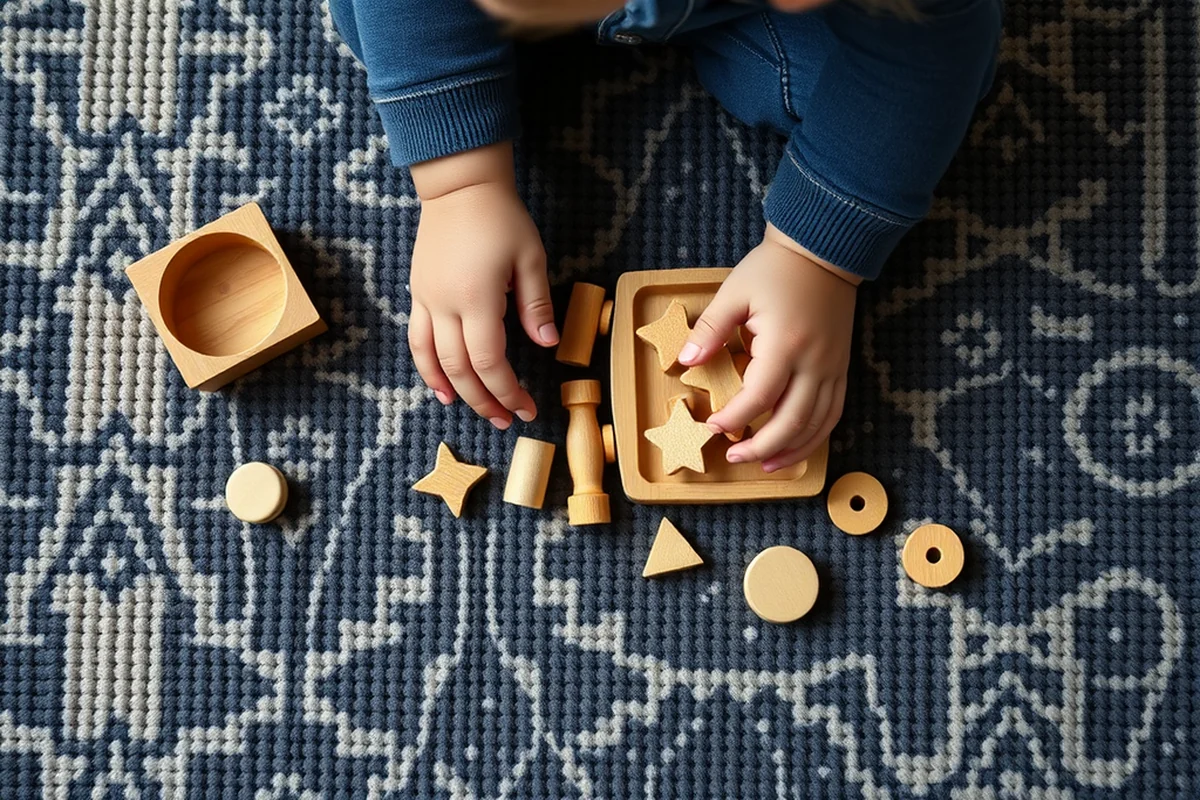
Children in Montessori environments often develop strong self-confidence and a natural curiosity about the world around them. They learn to take initiative, make decisions, and solve problems without constant adult intervention.
Research has shown that children in Montessori programs tend to perform better in academic subjects like math and reading, as well as in social and emotional skills. They are also more likely to develop a lifelong love of learning and a strong sense of self-motivation.[1]
The Montessori approach also supports the development of fine and gross motor skills, as well as sensory processing abilities. Through activities like pouring, sweeping, and sorting, children gain a deep understanding of their physical capabilities and how they relate to their environment.
Related: What is a montessori toddler bed
The Montessori Approach and Social Development
In a Montessori classroom, children are encouraged to interact with one another naturally, without the need for structured group activities. They learn to take turns, share materials, and resolve conflicts through respectful communication.
Because the environment is designed to support independence, children are also more likely to develop a strong sense of empathy and cooperation. They learn to respect others' space, listen actively, and support their peers in a non-competitive way.
Montessori educators often observe and guide these interactions, helping children understand the importance of respect, patience, and collaboration in social settings.
Related: Toddla montessori busy board
The Montessori Approach and Emotional Development
Children in Montessori environments are encouraged to express their emotions in a healthy and constructive way. They are taught to recognize and name their feelings, and to manage them through self-regulation and respectful communication.
Because the Montessori approach values the child’s natural development and individual needs, children feel safe to explore their emotions without judgment. This helps them build a strong sense of self-awareness and emotional intelligence.
The environment is also designed to support emotional resilience — children are given the freedom to make choices and face the natural consequences of their actions. Helps them develop a strong sense of responsibility and self-efficacy.
Emotional development is nurtured through respect, empathy, and self-awareness.
Related: Montessori educational toys for toddlers
The Montessori Approach in Everyday Life
Applying Montessori principles at home doesn’t require a complete overhaul of your lifestyle — it simply involves making small, intentional changes that support your child’s natural development.
Simple things like letting your child help with household chores, using child-sized tools, and allowing them to make choices about their daily activities can go a long way in fostering independence and confidence.
The key is to observe your child, understand their interests and needs, and create an environment that supports their learning and growth. This approach allows your child to feel in control of their learning and to develop a deep love of exploration and discovery.
🌱 Gentle Montessori
A slower, more flexible version of Montessori that allows for more spontaneity and individualized pacing.
⚡ Fast-Track Montessori
A more structured, time-sensitive version of Montessori that integrates core principles with a faster pace of learning.
✈️ Travel/Workaway Montessori
A version of Montessori that is ideal for families on the go, offering portable and adaptable learning tools.
👶 Montessori for Multiples
A tailored approach that supports the unique needs of twins, triplets, or siblings in a Montessori setting.
🔄 Montessori for Regression Reset
A specialized version of Montessori that helps children regain confidence and learning momentum after a setback.
| The mistake | Why it happens | The fix |
|---|---|---|
| Not allowing the child to lead the way. | Forcing the child into structured activities or lessons can undermine the core principle of the Montessori approach — self-directed learning and exploration. | Observe your child’s interests and allow them to take the lead in their learning. Offer support when needed, but never force them into a rigid structure. |
| Overloading the environment with too many materials. | Too many materials can be overwhelming for the child and may distract them from focusing on meaningful activities. | Keep the environment simple and organized. Offer a few high-quality, child-sized tools that promote learning and independence. |
| Not allowing the child to make choices. | The Montessori approach values the child’s autonomy and decision-making abilities. Not allowing the child to make choices can limit their sense of independence and self-efficacy. | Offer the child a variety of options and allow them to make choices about their activities, even in small ways like picking a snack or choosing a book to read. |
| Forcing the child to clean up immediately after playing. | Forcing the child to clean up immediately can create resistance and disrupt the natural flow of play and learning. | Let the child know that they are responsible for cleaning up, but allow them to do it at their own pace. Offer gentle guidance and encouragement instead of forcing them into immediate compliance. |
What Is Montessori Approach
Common Questions
Can the Montessori approach be used at home?
Is the Montessori approach only for young children?
How does the Montessori approach support academic learning?
Does the Montessori approach help with social skills?
References
Cite this guide
Thetraylife (2026). What Is the Montessori Approach and How Does It Work. https://thetraylife.com/what-is-montessori-approach/
Feel free to cite or share this guide.
Montessori Tray Idea Generator
Age-filtered Montessori tray ideas from household items.
Open it free →