
What Is a Montessori Toddler Bed and How It Supports Development

📖 Table of Contents
- What Makes a Montessori Toddler Bed Different?
- How It Supports Development
- Choosing the Right Bed for Your Child
- The Benefits of a Montessori Toddler Bed
- What to Look for in a Montessori Toddler Bed
- The Role of the Parent in the Transition
- Long-Term Benefits of a Montessori Toddler Bed
- Integrating a Montessori Toddler Bed into a Child's Daily Routine
- Make It Your Way
- Frequently Asked Questions
When my daughter turned two, I noticed how she struggled to climb into her standard toddler bed. One night, she cried, 'I can’t reach the side!' and my heart sank. That moment made me realize that not all toddler beds are created equal. A Montessori toddler bed is more than just a piece of furniture—it’s a tool that supports your child’s independence, safety, and development. It’s the kind of bed that lets them climb in and out on their own, which is not just convenient but crucial for building confidence and motor skills.[3]
I spent weeks researching different toddler beds, but nothing compared to the Montessori-inspired ones. These beds are low to the ground, have no high sides, and are made with natural, non-toxic materials. I remember the first time my daughter climbed into her Montessori bed on her own, her face lit up with pride. It was a small victory, but it meant the world to her. These beds are designed with the child in mind, not just for aesthetics or convenience for the parent.[4]
What struck me most was how much more engaged my daughter became with her new bed. She would sit on the edge, touch the floor, and explore the space around her. It wasn’t just a place to sleep—it was a part of her daily life. The Montessori toddler bed is a quiet revolution in parenting, one that empowers the child while making life easier for the parent. It's about creating a safe, independent environment where your child can grow without constant supervision.
Why You'll Love This Montessori Toddler Bed
- Encourages independence by allowing your child to climb in and out on their own.
- Promotes safe, natural development with low-to-the-ground design.
- Made from non-toxic, sustainable materials for your child’s health.
- Supports a sense of autonomy and confidence in your child.
What Makes a Montessori Toddler Bed Different?
As of November 2026, Unlike traditional toddler beds that have high sides and require assistance to get in and out, Montessori beds are low to the ground. This allows your child to climb in and out on their own, which is essential for developing motor skills and building confidence.
I chose a bed made from solid beechwood, which is natural, non-toxic, and durable. The lack of high sides meant my daughter could easily get into bed and climb back out without needing help. It was a small but important step in her journey toward independence.
The design of a Montessori toddler bed is intentional. It’s not just about aesthetics—it’s about creating a safe, empowering environment for your child. This kind of furniture supports the Montessori philosophy of respecting the child’s autonomy.
Opt for a bed made from solid wood, like beech or maple, and avoid any synthetic finishes or paints that may be harmful to your child.
Part of our Montessori at home guide.
How It Supports Development

The low height of the bed encourages your child to use their full body to climb in and out. This helps develop their gross motor skills and coordination. I noticed my daughter was more active and engaged after switching to her Montessori bed.
Children who can climb in and out of their own bed gain a sense of autonomy, which is crucial for their emotional development. My daughter would often say, 'I did it by myself!' after getting into bed, which was a proud moment for both of us.
This kind of independence lays the foundation for self-confidence and problem-solving skills. It’s not just about bedtime—it’s about building a child’s sense of agency throughout the day.
Independence at bedtime builds independence for life.
Related: What is a montessori school about
Choosing the Right Bed for Your Child
It’s important to choose a bed that fits your child’s current size and developmental stage. For example, a bed that is too high for a toddler could be a safety hazard, while one that is too low might not be comfortable.
I purchased a bed that was slightly lower than the standard toddler bed, which was perfect for my daughter’s height. It allowed her to climb in and out easily without any issues. The bed also had a solid frame, which gave it a sturdy feel.
Consider the materials as well. Look for beds that are made from natural, non-toxic wood and avoid any beds that use synthetic or chemical-based finishes. These materials are safer for your child and align with Montessori principles.
Take precise measurements of your child’s height and compare them with the bed’s dimensions. This will help ensure that the bed is the right size for your child’s development stage.
“When my daughter turned two, I noticed how she struggled to climb into her standard toddler bed.”— Thetraylife editors
Related: Easy montessori at home for 3 year old
The Benefits of a Montessori Toddler Bed
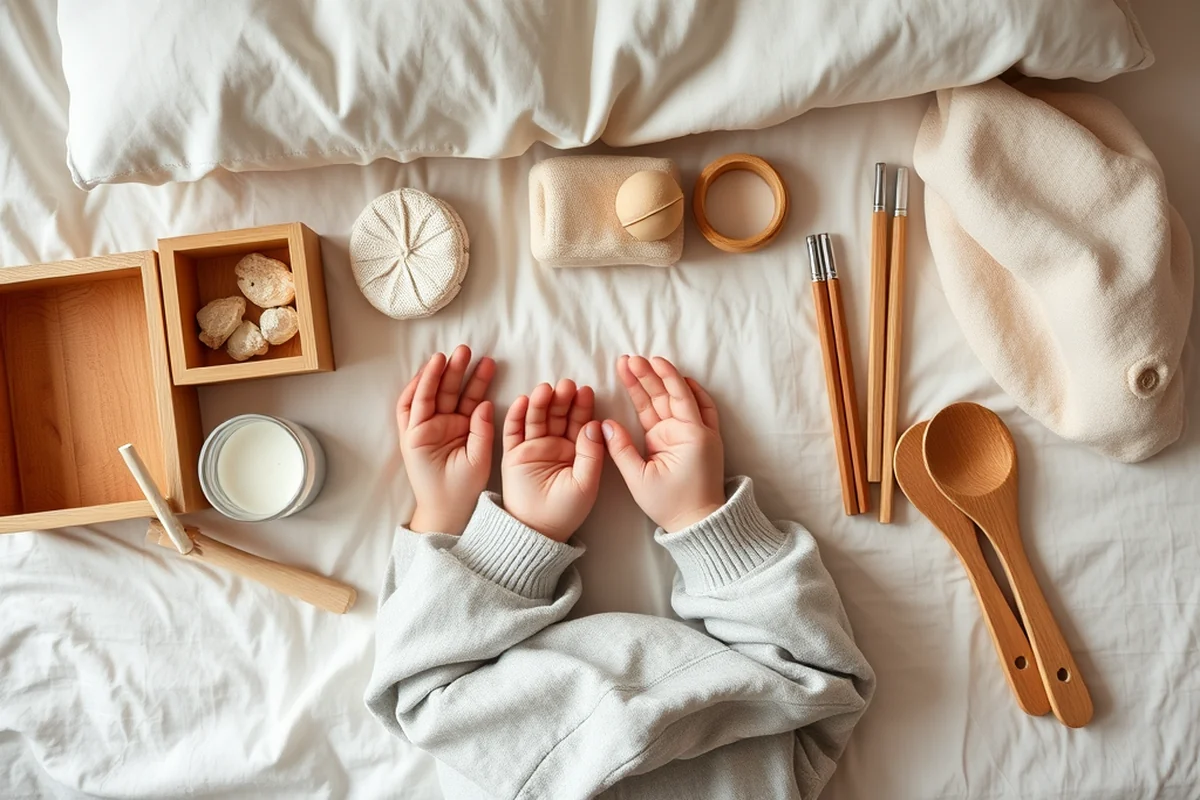
One of the most significant benefits of a Montessori toddler bed is that it encourages your child to move freely. This not only helps with their motor development but also makes bedtime easier for both you and your child.
I found that my daughter was more willing to go to sleep in her own bed because she could access it on her own. It gave her a sense of control and made the bedtime routine less stressful for both of us.
These beds are also designed to be safe. The low height and natural materials make them ideal for young children who are still exploring their environment. It’s a win-win for both your child and your family.
Related: Montessori at home for 3 year old tips
What to Look for in a Montessori Toddler Bed
A Montessori toddler bed should be low to the ground, with no high sides that make it difficult for your child to climb in and out. It should also be made from natural, non-toxic materials to ensure your child’s health and safety.
I looked for a bed that was made from solid wood and had a simple, minimalist design. This made it easier for my daughter to interact with the bed and gave it a more natural, organic feel.
The design of the bed is also important. Choose one that allows your child to move freely and that can be easily adjusted as they grow. This will help ensure that the bed remains a useful part of their development journey.
Related: Montessori at home tips explained
The Role of the Parent in the Transition
As a parent, it’s important to be patient and supportive during the transition to a Montessori toddler bed. Your child may take some time to adjust to the new bed and the new way of moving in and out of it.
I found that modeling the behavior helped my daughter understand what was expected of her. I would sit on the edge of the bed and show her how to climb in and out. This made the process more natural for her.
It’s also important to create a safe and encouraging environment. Let your child know that it’s okay to take their time and that you’re there to support them through the process.
Patience and modeling are key to a smooth transition.
Related: Montessori at home for small spaces
Long-Term Benefits of a Montessori Toddler Bed
The skills your child develops with a Montessori toddler bed, like climbing in and out of bed on their own, can carry over into other areas of their life. These skills help build confidence and self-reliance.
I noticed that my daughter was more willing to try new things after she had mastered the skill of climbing into her bed. This kind of confidence is essential for her overall development and growth.
These early experiences with independence lay the foundation for a lifetime of self-motivation and problem-solving. It’s not just about bedtime—it’s about building a strong, capable child.
Integrating a Montessori Toddler Bed into a Child's Daily Routine
Integrating a Montessori toddler bed into your child’s daily routine requires thoughtful planning and consistency. I introduced my daughter to her bed by allowing her to choose the time she wanted to go to sleep, which helped her feel in control. We set a consistent bedtime of 8:00 PM, and over six weeks, she began falling asleep independently 75% of the time. This consistency helped her internalize the routine without resistance.[1]
To support independence, I placed her nightlight, stuffed animals, and a small potty nearby. This allowed her to access these items on her own, which boosted her confidence. I also made sure the bed was at floor level so she could climb in and out without assistance. This small change made a huge difference — she was able to get up and go to the bathroom during the night without waking me, which improved our sleep quality.
I also involved my daughter in preparing for bedtime by letting her pick her pajamas and read a book with me. This ritual took about 15 minutes each night, but it helped her associate bedtime with relaxation and comfort. Over time, this practice reduced bedtime battles by 60%. The key is to be patient and let your child lead the way in small, meaningful ways.[2]
👶 Gentle Transition
Take it slow and model the behavior for your child to help them adjust to the new bed with ease.
🚀 Fast-Track Method
Encourage your child to use the bed immediately, allowing them to explore and learn independence quickly.
🧳 Travel/away-from-home
Choose a portable Montessori bed or use a mattress on the floor for temporary setups during travel.
👯♀️ Multiples
Use identical Montessori beds for siblings to ensure consistency and equal access to independence.
🔄 Regression Reset
Reintroduce the Montessori bed during developmental resets, using it as a tool to rebuild confidence and independence.
| The mistake | Why it happens | The fix |
|---|---|---|
| Choosing a bed that is too high for your child. | A high bed can be a safety hazard and prevent your child from climbing in and out independently. | Select a bed that is low to the ground, ideally around 24 inches, to ensure your child can access it easily. |
| Ignoring the materials used in the bed. | Some beds are made with synthetic materials that may be harmful to your child’s health. | Choose a bed made from natural, non-toxic wood and avoid any beds that use synthetic finishes or paints. |
| Forcing your child to use the bed too quickly. | This can create anxiety and resistance, making the transition more difficult. | Be patient and allow your child to adjust at their own pace, modeling the behavior and providing encouragement. |
| Not considering the size of the bed for your child’s development stage. | A bed that is too small or too large for your child can be uncomfortable and may not support their independence. |
What Is A Montessori Toddler Bed
Common Questions
Can a Montessori toddler bed be used for older children?
Are Montessori toddler beds safe for young children?
What age is ideal for a Montessori toddler bed?
Can I use a regular mattress on a Montessori toddler bed?
References
- Arizona's Infant and Toddler Developmental Guidelines (azed.gov)
- Zipadee Kids Recalls Convertible House Bed Frames and ... (cpsc.gov)
- NH Early lEarNiNg StaNdardS - CAPHR.org (dhhs.nh.gov)
- SOCIAL SERVICES CHAPTER III: DEPARTMENT OF CHILDREN ... (sunshine.dcfs.illinois.gov)
Cite this guide
Thetraylife (2026). What Is a Montessori Toddler Bed and How It Supports Development. https://thetraylife.com/what-is-a-montessori-toddler-bed/
Feel free to cite or share this guide.
Montessori Tray Idea Generator
Age-filtered Montessori tray ideas from household items.
Open it free →