
What Is Montessori in Education and Its Core Principles

📖 Table of Contents
I remember the first time I walked into a Montessori classroom. The space was quiet, filled with children moving with purpose, not chaos. It felt like a place where learning was not enforced but invited. That day, I realized that Montessori was more than a teaching method — it was a philosophy that respected the child's autonomy and curiosity. What is Montessori in education? It is a way of learning that allows children to explore, discover. Grow at their own pace, guided by trained educators who believe that the child is the active participant in their own learning.[1]
Before I had children, I thought education was about filling a child's mind with facts and figures. But after my daughter started attending a Montessori school, I saw that education was about fostering independence, self-motivation, and a love of learning. What is Montessori in education? It is a system that emphasizes hands-on learning, self-directed activity, and collaborative play. It's not about following a rigid schedule but about allowing each child to develop at their own rhythm, with the support of a carefully prepared environment.[2]
As a parent, I've come to understand that Montessori is not just for young children. It is a philosophy that can be applied across all ages, but in early childhood education, it is particularly transformative. What is Montessori in education? It is a child-centered approach that encourages exploration, critical thinking, and problem-solving. I've watched my daughter grow into a confident, inquisitive learner who doesn't need constant direction — she finds her own way. That is the power of Montessori.[3]
Why You'll Love This Montessori Approach
- Encourages independence and self-motivation in children
- Fosters a lifelong love of learning through exploration
- Supports individualized learning at the child's own pace
- Promotes critical thinking and problem-solving skills
What Is Montessori in Education?
As of November 2026, What is Montessori in education? It is a philosophy that originated in the early 20th century, created by Dr. Maria Montessori, an Italian physician and educator. Her approach was based on the belief that children learn best when they are given the freedom to explore and discover at their own pace. In a Montessori classroom, you will see children moving from one activity to another, choosing their own tasks, and learning through direct experience. This is not a traditional classroom where a teacher lectures and children sit in rows — it is a space designed for active, engaged learning.[4]
I remember the first time I saw my daughter pick up a wooden spoon and mix water and sand in a small container. It was not part of a lesson — it was just her exploring. That moment made me realize how Montessori works: through real, tangible experiences that spark curiosity and deepen understanding. Children in Montessori schools are not given answers — they are guided to find them themselves. This method not only builds knowledge but also builds confidence and a sense of self-efficacy.
Montessori classrooms are carefully prepared environments that support the child's natural development. From the height of the shelves to the arrangement of materials, everything is designed with the child in mind. The teacher's role is not to direct but to observe, support, and intervene when necessary. This allows children to take ownership of their learning, which is a powerful motivator.
Try setting up a small area with low shelves, child-sized furniture, and open-ended materials like wooden blocks, puzzles, and sorting trays. Let your child choose what to play with and explore freely. This mimics a Montessori classroom and encourages independence at home.
Part of our Montessori at home guide.
The Core Principles of Montessori Education
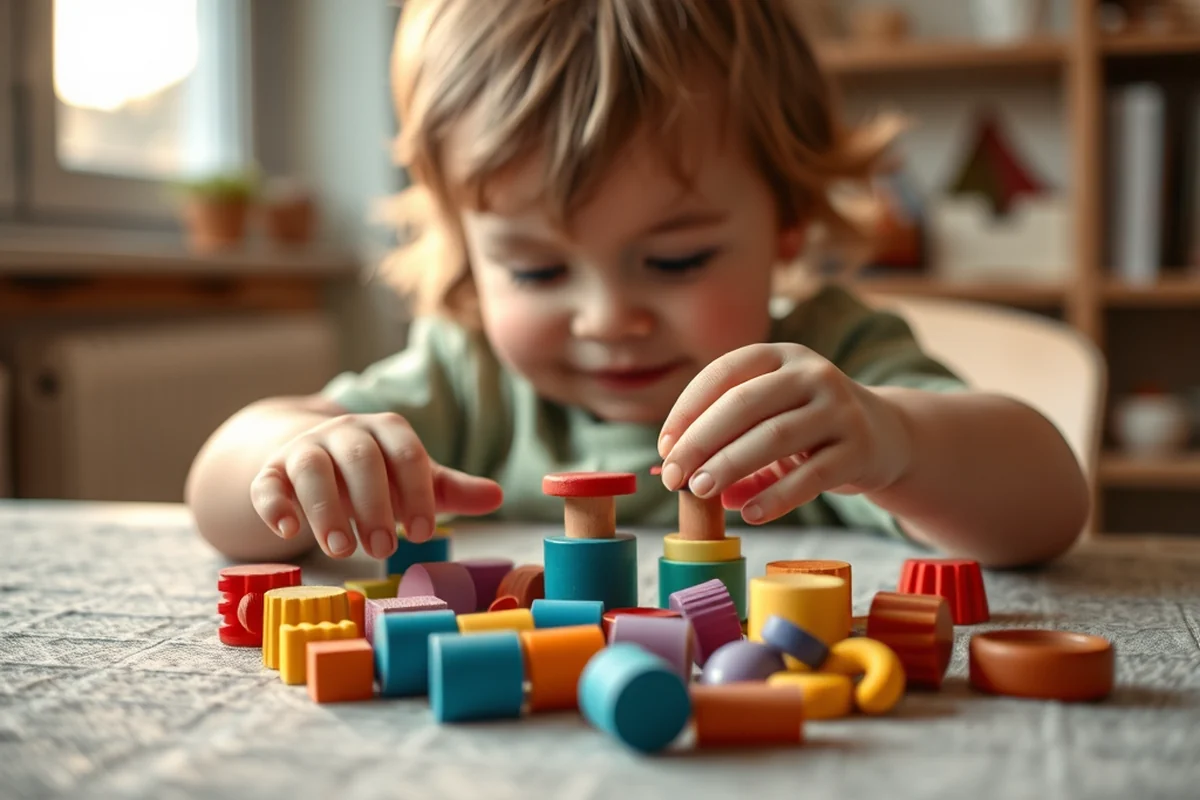
One of the core principles of Montessori education is that the child is the center of the learning process. This means that instead of following a rigid curriculum, each child's interests, abilities, and developmental stage are taken into account. The teacher's role is to observe and guide, not to control or direct. This approach allows children to learn at their own pace and in their own way.
Another principle is the importance of a prepared environment. This is a space that is designed to support the child's natural development, with materials that are accessible, engaging, and suited to the child's age and interests. For example, a toddler might have access to large, easy-to-grasp objects, while an older child might have more complex materials that encourage problem-solving and critical thinking.
Respect for the child is another key principle. In a Montessori classroom, children are treated as capable individuals with their own thoughts, feelings, and ideas. Teachers do not interrupt a child's work unless absolutely necessary, and they encourage children to speak up, share their ideas, and take responsibility for their actions. This builds confidence and a strong sense of self-worth.
In Montessori, the child is not a passive learner — they are the driver of their own learning journey.
Related: What is a montessori school definition
How Montessori Fosters Independence
Independence is one of the most important outcomes of a Montessori education. From the moment a child enters a Montessori classroom, they are given the opportunity to choose their activities, complete tasks on their own, and take responsibility for their learning. This is a powerful way to build self-confidence and a sense of accomplishment.
I've seen this in action with my daughter. She would pick up a book, read it on her own, and then go to the shelves and find a related activity, such as sorting objects or matching colors. This kind of self-directed learning is not only empowering for the child but also incredibly effective. When children take ownership of their learning, they are more likely to stay engaged and retain what they have learned.
Montessori educators also emphasize the importance of allowing children to make mistakes and learn from them. They do not correct a child immediately but instead guide them to find their own solutions. This approach teaches children to think critically, solve problems independently, and build resilience.
Let your child make small decisions throughout the day, such as choosing their clothes, picking a snack, or deciding where to sit during meals. This helps build independence and self-awareness in a natural, everyday setting.
“I remember the first time I walked into a Montessori classroom.”— Thetraylife editors
Related: Montessori at home curriculum mistakes
The Role of the Montessori Teacher
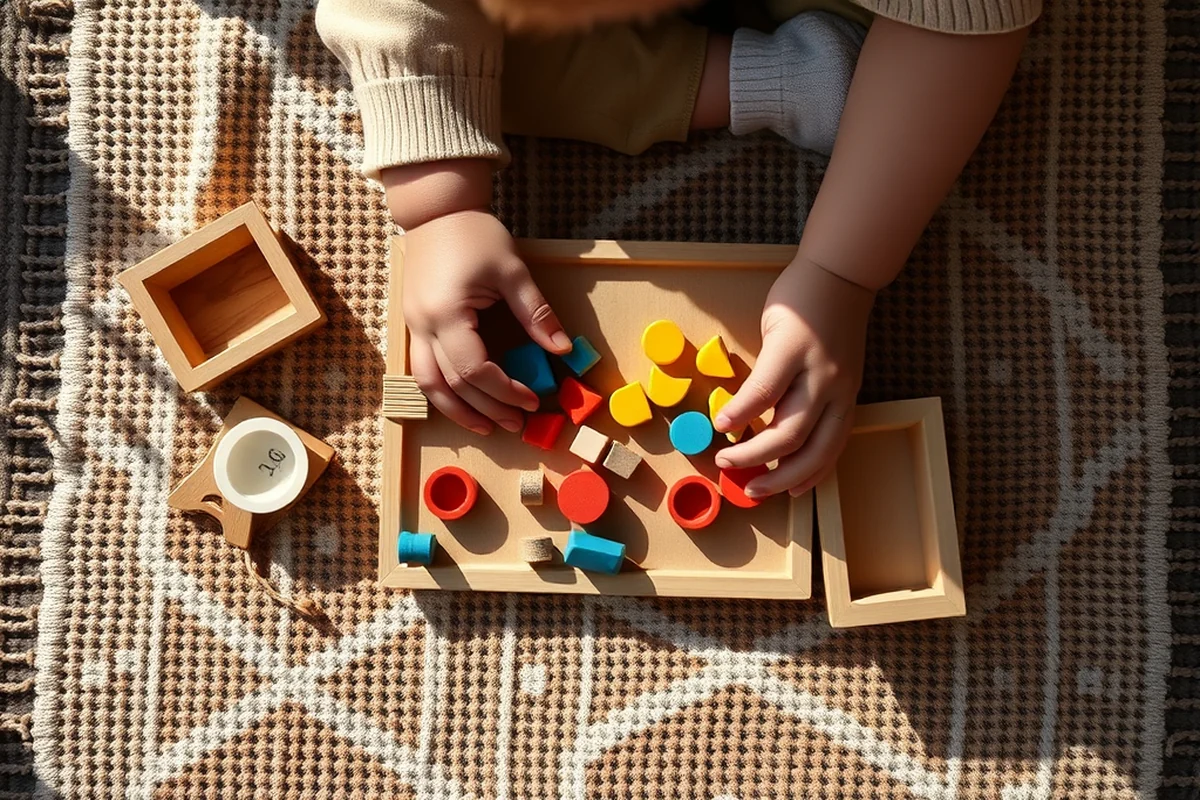
In a Montessori classroom, the teacher's role is not to lecture or direct — it is to observe, support, and guide. Montessori teachers are trained to recognize each child's unique needs, interests, and developmental stage and to provide the right kind of support at the right time.
One of the most important aspects of a Montessori teacher's role is to create a prepared environment that supports the child's learning. This includes arranging the classroom in a way that is accessible, engaging, and safe for the child. It also includes selecting materials that are appropriate for the child's age and interests.
Montessori teachers also act as facilitators, helping children to explore, discover, and learn on their own. They do not give answers but instead ask guiding questions that help the child think critically and find their own solutions. This approach builds confidence, independence, and a lifelong love of learning.
Related: In home montessori daycare for beginners
Montessori and Social-Emotional Development
One of the most overlooked benefits of Montessori education is its support for social-emotional development. In a Montessori classroom, children are encouraged to interact with one another, share materials, and work together on tasks. This helps them develop important social skills such as empathy, cooperation, and conflict resolution.
I've seen my daughter learn to share and take turns in a Montessori classroom — not because she was told to, but because she saw the value in working with others. This kind of peer interaction is a powerful way to build social skills and a sense of community.
Montessori teachers also play an important role in supporting a child's emotional development. They encourage children to express their feelings, resolve conflicts peacefully, and take responsibility for their actions. This helps children develop emotional intelligence and a strong sense of self-worth.
Related: Beginner montessori activities at home
Montessori and the Importance of Play
In Montessori education, play is not just a form of entertainment — it is a powerful tool for learning. Through play, children develop important cognitive, social, and emotional skills. They also learn to solve problems, think creatively, and take initiative.
I've seen my daughter learn to count, recognize letters, and understand concepts like size and shape through play. She would sit for hours with blocks, puzzles, and sorting trays, not because she was being forced to — but because she was engaged and interested. This is the power of play in a Montessori classroom.
Montessori teachers encourage children to play freely, without interruption or direction. They provide a wide range of materials that allow children to explore, experiment, and discover on their own. This kind of unstructured play is not only fun — it is essential for a child's development.
Play is not just for children — it is the foundation of learning in Montessori education.
Related: Montessori kids universe
Montessori in the Modern World
In a world where screens and technology are everywhere, Montessori education offers a refreshing alternative. It emphasizes hands-on learning, real-world experiences, and the development of critical thinking skills that are essential for success in the modern world.
I've noticed that my daughter is not only more curious and engaged in her learning — she is also more focused and self-directed. She doesn't need constant supervision or redirection — she finds her own way. This is one of the most valuable outcomes of a Montessori education.
Montessori education is not just for young children — it is a philosophy that can be applied across all ages. It encourages lifelong learning, self-motivation, and a deep appreciation for the world around us. In a time when we are constantly bombarded with information and distractions, Montessori offers a path to meaningful, purposeful learning.
🌿 Gentle Montessori
A slower, more relaxed approach that focuses on the child's emotional and psychological well-being.
🚀 Fast-Track Montessori
A more accelerated version of Montessori that emphasizes structured learning and rapid skill acquisition.
✈️ Travel Montessori
A portable, flexible approach that allows families to maintain Montessori principles even when on the move.
👶 Montessori for Multiples
A tailored approach that supports the unique needs of twins, triplets, and other multiple births.
🔄 Montessori for Regression Reset
A method designed to help children who are experiencing developmental delays or learning challenges.
| The mistake | Why it happens | The fix |
|---|---|---|
| Assuming all Montessori schools are the same. | Not all Montessori schools are created equal. Some may not follow the Montessori philosophy strictly or may lack trained Montessori teachers. | Research the school's philosophy, teacher qualifications, and classroom environment before enrolling your child. |
| Forcing a child to follow a Montessori routine. | Montessori is about self-directed learning, not about forcing children to follow a rigid schedule. This can lead to frustration and disengagement. | Allow your child to explore and learn at their own pace — Montessori is about freedom, not control. |
| Using too many materials at once. | In Montessori education, the use of materials is intentional. Too many materials can overwhelm the child and make it difficult for them to focus on a single task. | Start with a few high-quality materials and introduce new ones gradually, based on the child's interests and developmental stage. |
| Ignoring the child's individual needs. | Montessori education is about meeting the child where they are and supporting their unique learning style. Ignoring their individual needs can lead to disengagement and frustration. | Observe your child's interests, abilities, and developmental stage, and tailor the learning environment to support their individual needs. |
What Is Montessori In Education
Common Questions
How does Montessori differ from traditional education?
Is Montessori only for young children?
What are the benefits of Montessori education?
Can Montessori be implemented at home?
References
- (PDF) Montessori Education - Academia.edu (academia.edu)
- Unraveling the Truth About Montessori Education in blogs (aiu.edu)
- What is Montessori? - Bethany Global University (bethanygu.edu)
- Montessori Education Introduction (cgms.edu)
Cite this guide
Thetraylife (2026). What Is Montessori in Education and Its Core Principles. https://thetraylife.com/what-is-montessori-in-education/
Feel free to cite or share this guide.
Montessori Tray Idea Generator
Age-filtered Montessori tray ideas from household items.
Open it free →