
Small Montessori at Home Ideas: Simple and Practical Layouts

📖 Table of Contents
- How to Use Small Spaces for Big Montessori Impact
- The Power of a Low Table for Learning
- The Importance of a Calm and Focused Environment
- How to Involve Your Child in the Setup Process
- How to Incorporate Nature into Your Montessori Space
- The Role of a Parent in a Montessori Setup at Home
- How to Maintain a Montessori Environment in a Small Space
- Make It Your Way
- Frequently Asked Questions
When my daughter turned two, I found myself overwhelmed by the idea of creating a Montessori space at home. Our tiny apartment didn't have the luxury of a dedicated room, but I was determined to make the most of what we had. I spent hours reading about how to arrange a Montessori environment, but many of the ideas felt impractical for our space. Eventually, I stumbled upon small Montessori at home ideas that worked for us — simple, flexible, and deeply impactful. These were not just about aesthetics; they were about giving my daughter the tools to explore, learn, and grow.[1]
One of the first changes I made was replacing our cluttered toy shelf with open, low shelves that my daughter could reach. It was a small shift, but the way she moved around the space, picking up and arranging her own belongings, was magical. I realized that even in a small space, a Montessori approach could be transformative. It wasn’t about perfection — it was about intention. The most important part of the journey was watching her gain confidence through her own choices.[2]
Small Montessori at home ideas are not only about space — they’re about mindset. When I let go of the need for a grand setup, I found that the most meaningful moments came from simple, everyday choices. A few well-placed shelves, a low table, and a few natural materials were enough to make our home feel like a place of learning and discovery. This is where the magic of Montessori really begins — not in a perfect room, but in the way we choose to engage with our children and our space.[3]
Why You'll Love This Montessori Setup at Home
- Encourages independence and self-directed learning from a young age
- Transforms even small spaces into meaningful learning environments
- Fosters a calm and focused atmosphere with minimal clutter
- Strengthens the bond between parent and child through intentional engagement
How to Use Small Spaces for Big Montessori Impact
As of November 2026, one of the most effective Montessori at home ideas is to use vertical space. Instead of cluttering the floor with toys, I installed open, low shelves that reached up to my daughter’s waist. This allowed her to reach for her own books, blocks, and other materials without needing help. It wasn’t just about accessibility — it was about giving her a sense of control and ownership over her environment.[4]
Another key idea is to use natural materials. We kept a small table with a few wooden items — a basket with wooden blocks, a tray with beads, and a few small pots for sorting. These materials are not only safe for little hands, but they also invite exploration in a way that plastic toys often don’t. I saw a noticeable difference in her focus and curiosity when she used these items regularly.[5]
I also made it a point to keep the space minimal. I avoided overwhelming her with too many choices at once. Instead, we focused on one or two activities at a time. This helped her develop a deeper connection with each item and made the space feel more like a sanctuary for learning.
Wooden blocks, wooden trays, and natural fibers are excellent for small Montessori spaces. They’re safe, durable, and have a calming effect on children.
Part of our Montessori at home guide.
The Power of a Low Table for Learning
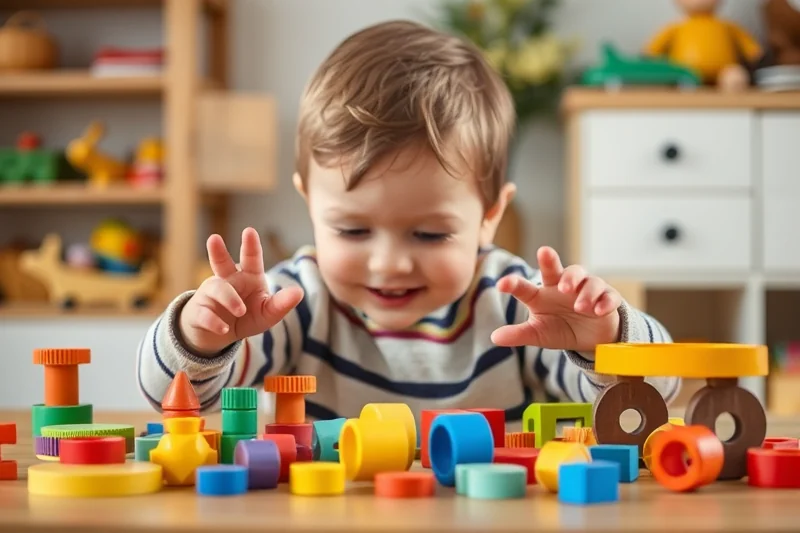
I invested in a small, low table — one of the two main purchases I made — and it became the center of our Montessori space. This table was just the right height for my daughter to sit at and engage with her materials. I placed a small tray on it with items like buttons, beads, and small containers. She could sort them, count them, and arrange them however she wanted.
This setup helped her develop fine motor skills and hand-eye coordination. The table also gave her a sense of independence — she could clear it, set it up, and tidy it herself. I noticed that she became more focused and less distracted by her surroundings, which was a huge win for our daily routines.
The low table also became a place for her to sit and read, or even draw. I would sit next to her, offering gentle support and encouragement as she explored her own interests. It was a small change, but it had a huge impact on the way she engaged with her environment.
A low table can be the most powerful tool in a small Montessori space.
Related: Montessori at home book alternatives
The Importance of a Calm and Focused Environment
One of the most important Montessori at home ideas I learned was to keep the space calm. This meant limiting the number of items on display and ensuring that everything had a designated place. My daughter quickly learned where to find her materials, which made her more independent and less likely to be distracted by clutter.
I also made a rule that we would not allow loud music or TV in the space. This helped create a peaceful atmosphere where she could focus on her activities. Over time, I noticed that she spent longer periods in this space and was more engaged in her learning.
This calm environment also helped me feel more present as a parent. I wasn’t rushing her or trying to entertain her — I was simply offering her the space and materials to explore on her own. It was a shift that made our daily routines more peaceful and meaningful.
Remove distractions like TV and loud music from your Montessori space. A calm environment helps children focus and learn more effectively.
“When my daughter turned two, I found myself overwhelmed by the idea of creating a Montessori space at home.”— Thetraylife editors
Related: Budget montessori at home ideas
How to Involve Your Child in the Setup Process
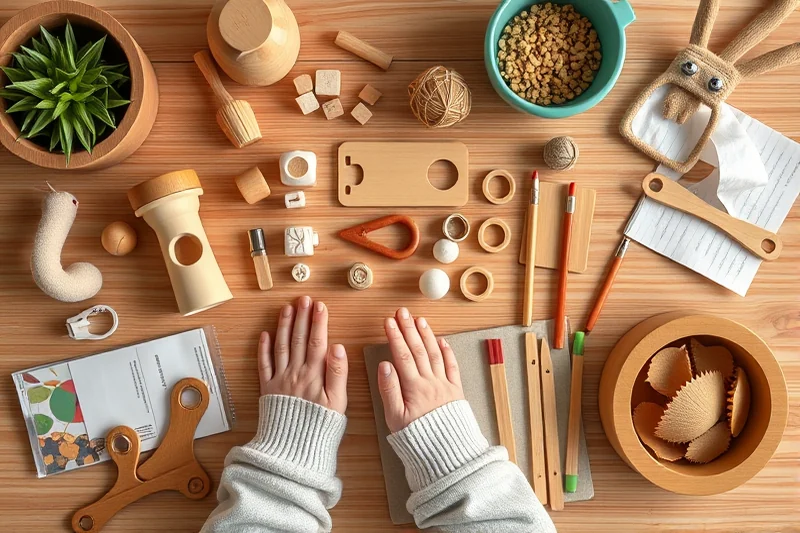
One of the best small Montessori at home ideas I discovered was involving my daughter in the setup process. I let her choose which items she wanted on her shelf, which color of tray she preferred, and even helped her arrange the items herself. This gave her a sense of ownership and made her more excited to use the space.
I also made a point to explain the purpose of each item. For example, when we placed a sorting tray on the table, I would tell her that it was for learning about colors and sizes. This helped her understand the value of each activity and made her more motivated to engage with them.
By involving her in the setup, I noticed that she became more responsible and more independent. She would even remind me when it was time to tidy up or when she wanted to use a new item. It was a beautiful way to foster her autonomy and curiosity.
Related: Montessori at home comparison
How to Incorporate Nature into Your Montessori Space
One of the small Montessori at home ideas that had a profound impact was bringing in elements of nature. We placed a small potted plant on the shelf, and I would sometimes bring in leaves or rocks from our walks. These natural items added a calming effect to the space and encouraged my daughter to explore and learn about the world around her.
I also made sure to use natural light as much as possible. During the day, we would leave the curtains open, and I noticed that she seemed more alert and focused when the sunlight streamed in. This natural light also helped regulate her sleep patterns, which was a bonus.
By incorporating these natural elements, I felt like our Montessori space was more alive and connected to the world. It was a reminder that learning doesn’t just happen in books or on screens — it happens in the natural world around us.
Related: Start montessori at home explained
The Role of a Parent in a Montessori Setup at Home
One of the most important Montessori at home ideas I learned was to step back and observe. Instead of constantly directing her, I made sure to give her space to explore on her own. This meant watching from a distance and only stepping in if she needed help.
When she did need assistance, I would try to guide her through the process rather than doing it for her. For example, if she was struggling to stack blocks, I would show her how to balance them instead of doing it myself. This helped her develop problem-solving skills and build confidence.
By observing and guiding rather than controlling, I noticed that my daughter became more self-reliant and more curious. She was more willing to take risks and try new things, which was a huge shift in her learning style.
The most powerful Montessori parents are the ones who know when to step back and let their child lead.
Related: Free montessori lessons online
How to Maintain a Montessori Environment in a Small Space
One of the challenges of small Montessori at home ideas is keeping the space tidy. I found that regular cleaning and organization were essential. Every day, I would spend a few minutes tidying up the shelves and making sure that everything was in its place. This helped my daughter learn the importance of order and responsibility.
I also made a rule that we would only add new items to the space if they were purposeful and not just decorative. This helped avoid clutter and ensured that every item in the space had a role to play in her learning.
By maintaining this sense of order, I found that my daughter became more independent and more focused. She knew where everything was and didn’t feel overwhelmed by the space. It was a small change that made a big difference in our daily lives.
🌿 Gentle Start
Ideal for parents new to Montessori, this approach focuses on small, gentle changes that build confidence and curiosity over time.
🚀 Fast-Track Setup
For parents who want a quick transformation, this variation includes ready-made Montessori setups that can be implemented in a few days.
🧳 Travel/On-the-Go Montessori
Perfect for parents who are often away from home, this approach includes portable Montessori kits that can be taken on the go.
👨👧👦 Montessori for Multiples
This variation is designed for parents with more than one child, offering shared Montessori setups that support individual and group learning.
🔄 Montessori Reset
This approach is ideal for parents who want to refresh or reset their Montessori space, offering new ideas and techniques for long-term growth.
| The mistake | Why it happens | The fix |
|---|---|---|
| Overloading the space with too many items | Too many items can overwhelm your child and make the space feel chaotic instead of calm and focused. | Keep the space minimal and purposeful, adding only a few items that are meaningful and safe for your child. |
| Forcing your child to use the space | Forcing your child to use the space can lead to resistance and a lack of interest in the activities. | Allow your child to explore the space on their own terms and only offer gentle guidance when needed. |
| Ignoring the importance of natural materials | Plastic and synthetic materials can be less engaging and less safe for young children compared to natural items. | Choose items made from wood, felt, or other natural materials to create a more engaging and safe environment. |
| Not involving your child in the setup | Not involving your child in the setup can make them feel disconnected from the space and less invested in their learning. | Involve your child in the setup process by letting them choose items and arrange them themselves. |
Small Montessori At Home Ideas
Common Questions
What if I don’t have enough space for a Montessori setup?
How do I choose the right items for my Montessori space?
Can I involve my child in the setup process?
What if my child doesn’t seem interested in the Montessori setup?
References
- Chenal Valley Montessori School Elementary Middle School ... (arksped.ade.arkansas.gov)
- Montessori: Evidence Based Reading Curricula (azed.gov)
- Examples of Alternative Schools and Programs (cde.ca.gov)
- Georgia's Pre-K Program 2020-2021 - Decal.ga.gov (decal.ga.gov)
- Montessori Primary Classroom Inventory Series (ed.sc.gov)
Cite this guide
Thetraylife (2026). Small Montessori at Home Ideas: Simple and Practical Layouts. https://thetraylife.com/small-montessori-at-home-ideas/
Feel free to cite or share this guide.
Montessori Tray Idea Generator
Age-filtered Montessori tray ideas from household items.
Open it free →