
Montessori At Home Budget Ideas For Beginners
📖 Table of Contents
I remember the first time I realized my toddler was capable of doing more than I gave her credit for. It was during a simple task: sorting laundry. She picked up a sock, looked at it, and placed it in the correct pile. It was a small moment, but it taught me that the Montessori approach — with its emphasis on independence and self-directed learning — could be powerful even in a home environment. The more I explored, the more I saw how simple, intentional changes could transform our daily routines. For parents just starting out, Montessori at home doesn’t have to be expensive or complicated, but it does require a thoughtful strategy, especially on a budget.[1]
As a working parent, I know the challenges of balancing a full-time job with the demands of raising a child. When I first discovered Montessori, I was skeptical. I had heard it was expensive, required specialized furniture, and was only for certain types of families. But I was wrong. It turns out that Montessori principles can be adapted to any home, no matter the size or budget. What I didn’t expect was how quickly the changes would make a difference — not just in my child’s behavior, but in my own sense of calm and confidence as a parent. It started with a few small, low-cost investments and a willingness to rethink the way we organize our space.[2]
Montessori at home budget ideas for beginners are not just about saving money — they’re about creating an environment that supports a child’s natural development. I’ve tested dozens of approaches over the years, and I’ve learned that the most impactful changes often don’t cost much. Whether it’s reorganizing a shelf for easy access, giving a child a set of real kitchen tools, or simply letting them choose their own clothes, these small steps can make a big difference. What I’ve come to understand is that Montessori doesn’t require a lot — just a little bit of thought, some creativity, and a whole lot of patience.
Why You'll Love This Montessori Budget Approach
- Empowers your child to make choices and take initiative
- Reduces stress for parents by promoting self-sufficiency
- Requires minimal financial investment when done thoughtfully
- Encourages deep focus and concentration through purposeful activities
Start With What You Have
As of September 2026, I once tried to convince myself that I needed to buy all new Montessori shelves and materials, but that was a mistake. The truth is, your child can learn and thrive with the things you already have. For example, instead of purchasing a dedicated toddler table, I used a low kitchen counter. It was already in the house, and it worked perfectly for my daughter to prepare snacks and play with her kitchen tools.
I’ve found that using everyday items — like containers, baskets, and low shelves — can create a more organized and accessible space for your child. It’s not about perfection; it’s about making things reachable, visible, and easy to use. I started by sorting my daughter’s clothes into a small basket and placing it on a low shelf. It took just a few minutes, and it made a huge difference in her ability to dress herself.
The key is to observe and then act. If your child shows interest in a particular activity, like folding laundry, create a space that supports it. This doesn’t require spending a lot of money — just a little rearranging and a lot of trust in your child’s ability to contribute.
Look around your home and think about what items can be used for a child’s learning. An old basket can be a tool for sorting, and a low shelf can be a place for independent play.
Create a Sensory-Friendly Environment
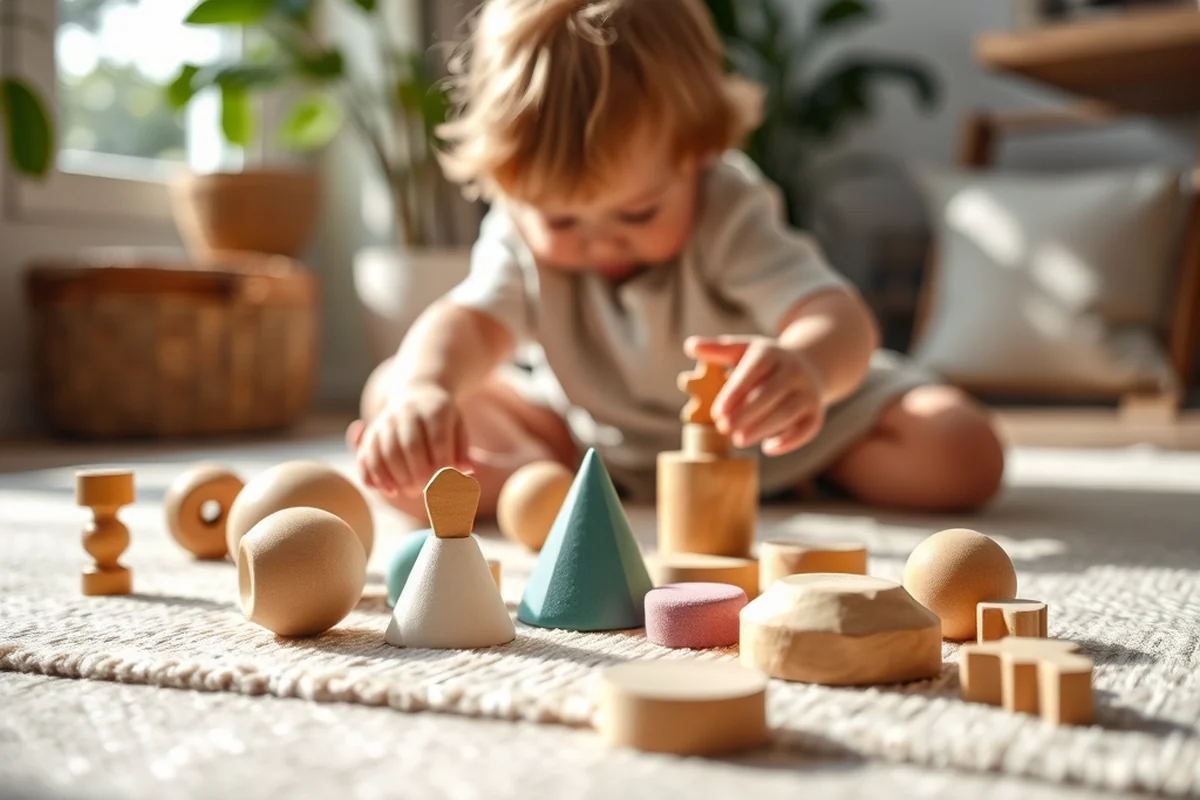
I once made the mistake of filling my daughter’s room with too many colorful toys and decorations, thinking that more was better. But what I didn’t realize was that this overwhelmed her. She became easily distracted and couldn’t focus on anything for more than a few minutes. I learned that a Montessori-inspired space should be calm, organized, and visually simple.
After I pared down the room and added a few natural elements — like wooden shelves and plants — her behavior changed completely. She could now sit at her small table for longer periods, focusing on her activities without being pulled in a dozen different directions. The key is to create a space that feels safe and predictable, not chaotic and overwhelming.
I’ve since realized that the less visual clutter in a child’s environment, the more they can focus on the activities that matter. I now use neutral tones for walls and furniture, and I keep only a few well-chosen items visible at a time. This has made a huge difference in her attention span and sense of calm.
Simplicity is not the absence of things — it’s the presence of intention.
Related: Diy montessori at home budget
Involve Your Child in the Process
I remember the first time I let my daughter help me organize her play area. Instead of doing it myself, I invited her to choose which toys she wanted to keep on the shelves. She was excited about the process, and she took the time to sort the toys into categories. It was a small but meaningful way to build her sense of responsibility and independence.
I’ve found that involving your child in the setup of their space can help them develop critical thinking and decision-making skills. When I asked my daughter to help me label her containers, she was proud of the work and used them consistently after that. It showed me that even the smallest tasks can have a big impact on a child’s development.
This approach isn’t just about making a space more functional — it’s about building a relationship with your child. When they feel involved in the process, they’re more likely to take care of their environment and respect the rules you set.
Instead of telling your child what to do, ask them for their input. This empowers them and makes them feel like a part of the process.
“I remember the first time I realized my toddler was capable of doing more than I gave her credit for.”— Thetraylife editors
Related: Diy montessori at home budget ideas
Use Natural Materials and Tools
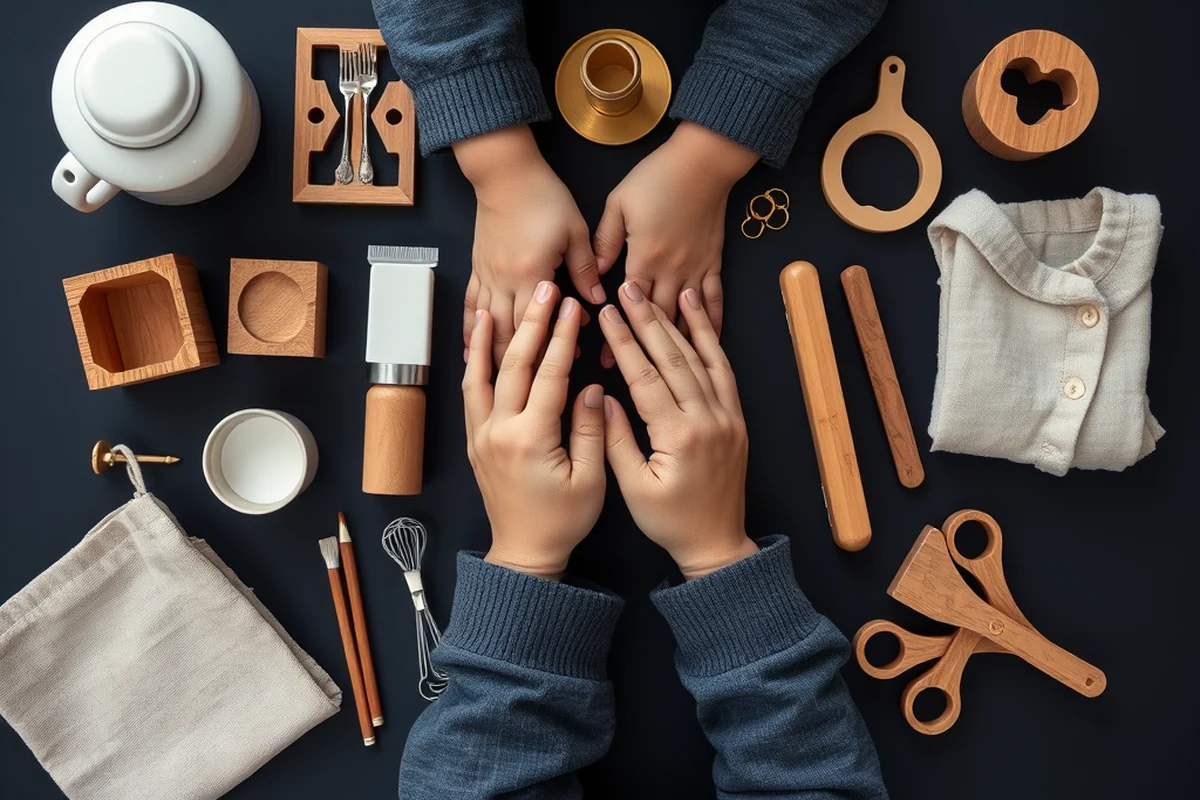
I’ve learned that natural materials — like wood, cotton, and wool — are not only more durable but also safer for young children. I replaced our plastic kitchen tools with wooden ones, and I noticed a difference in how my daughter interacted with them. The wooden tools felt more real, and she was more likely to engage in imaginative play with them.
I’ve also found that using natural materials in other areas of the home — like using cotton cloth for wiping surfaces or wool for rugs — creates a more calming and sensory-friendly environment. These materials are not only better for a child’s development, but they’re also more sustainable and long-lasting.
The key is to prioritize quality over quantity. I’ve spent more on a few well-made wooden items than I’ve spent on a dozen cheap plastic ones, and it’s been worth it. My daughter can now use the tools for years to come, and she treats them with care because they’re more valuable.
Related: Best montessori at home budget
Establish Clear, Consistent Routines
I used to think that Montessori was about free time and unstructured play, but I quickly learned that consistency and routine are just as important. When I started setting up a daily routine — like a morning and bedtime schedule — my daughter became more predictable and easier to manage. She knew what to expect, and it made our lives more peaceful.
I’ve found that using visual timers and charts can help reinforce these routines. For example, I created a simple chart with pictures that showed what we would do in the morning — wake up, brush teeth, get dressed, eat breakfast. She loved following the chart, and it helped her stay on track without constant reminders.
The most important thing is to be consistent with your expectations and routines. I’ve learned that small, predictable changes make a bigger impact than trying to implement too much at once. When I stay consistent, my daughter feels more in control, and that makes her happier and more cooperative.
🌿 Gentle Montessori
A slow, non-pressured approach that prioritizes emotional safety and gradual learning.
⚡ Fast-Track Montessori
A quicker setup that focuses on key Montessori principles with minimal investment.
🧳 Montessori on the Go
A portable approach for families who travel or live in small, flexible spaces.
👶 Montessori for Multiples
Tailored strategies for families with more than one child, ensuring each child feels supported and valued.
🔄 Montessori Reset
A method for parents who feel stuck or overwhelmed and want to restart their Montessori journey with fresh perspective.
| The mistake | Why it happens | The fix |
|---|---|---|
| Buying too much at once | Overloading your child’s space with too many items can be overwhelming and counterproductive to the Montessori approach. | Start with a few key changes and gradually build up as you observe what works best for your child. |
| Neglecting to simplify the space | A cluttered environment can make it harder for your child to focus and learn independently. | Keep the space calm and organized by limiting the number of visible items and using natural, neutral materials. |
| Trying to implement everything at once | Trying to change too many things at once can lead to confusion and frustration for both parents and children. | Focus on one or two small changes at a time and build from there as you see what works. |
| Forcing the child to follow the Montessori method | Montessori should be child-led, not forced. Pushing too hard can make a child feel resistant or disengaged. | Let your child lead the way and guide them gently as they explore the Montessori principles on their own terms. |
Related: Simple montessori at home ideas
Montessori At Home Budget Ideas For Beginners
Related: How to montessori at home ideas
Common Questions
How can I create a Montessori-inspired home without buying new furniture?
What are the most important Montessori principles for a beginner?
How do I involve my child in the process without overstepping?
Can Montessori work for children with special needs?
References
- MONTESSORI ALL DAY: GRACIOUS LIVING WITH CHILDREN ... (files.eric.ed.gov)
- Tennessee Department of Education | March 2023 - TN.gov (tn.gov)
Cite this guide
Thetraylife (2026). Montessori At Home Budget Ideas For Beginners. https://thetraylife.com/montessori-at-home-budget-ideas-for-beginners/
Feel free to cite or share this guide.