
Montessori At Home Routines That Actually Work
📖 Table of Contents
I remember the first time I tried to implement Montessori at home — I was overwhelmed by the sheer number of 'shoulds' and 'musts' that came with it. I had read books, watched videos, and even bought a few materials, but nothing felt like it was working. It was only after I stopped trying to replicate a classroom and instead focused on creating a space that respected my daughter’s autonomy, that things began to shift. That’s when I realized that Montessori at home routines that actually work don’t require perfection — they require presence.
Montessori at home routines that actually work are not about following a script or ticking boxes. They’re about observing, listening, and adapting to your child’s rhythms and needs. Over the past two years, I’ve tested and refined routines that align with Montessori principles, and I’ve seen the difference it makes in my child’s confidence, independence, and joy. It’s not just about the environment — it’s about the relationships we build within it.[1]
One of the most surprising things I’ve learned is that Montessori at home routines that actually work don’t need to be complicated. They can be as simple as a morning ritual that allows your child to choose their own clothes, or a quiet afternoon where they’re free to explore the garden for as long as they want. The key is consistency and respect. When we give children the freedom to engage with their world — within boundaries — we’re not just teaching them skills; we’re nurturing their natural curiosity and sense of self.[2]
Why You'll Love This Montessori At Home Approach
- Empowers your child’s independence and decision-making skills from a young age.
- Reduces stress by creating predictable, child-led routines that align with their natural rhythms.
- Fosters a deeper connection between you and your child through intentional, unhurried interactions.
- Encourages creativity, problem-solving, and self-regulation through open-ended exploration.
Morning Routines That Honor Autonomy
As of September 2026, I’ve found that the most effective Montessori at home routines that actually work start in the morning — and they’re built around giving your child choices. Instead of rushing your child out the door, I allow her to pick her own outfit, pour her own cereal, and brush her teeth at her own pace. This not only builds confidence but also teaches her the value of preparation and self-care.
One of the hardest shifts I made was letting go of the need to control the morning. At first, I felt like everything was taking twice as long, but over time, I noticed her becoming more consistent and efficient. She learned to plan ahead, and the morning transition became less stressful for both of us.
A practical tip is to set up a small clothes rack with just a few options that are age-appropriate, and keep the cereal bowl and spoon within her reach. This creates a sense of ownership and control, which is key to Montessori philosophy.
Offer 2-3 choices in the morning — whether it’s clothes, breakfast, or the order of activities — and watch her grow more confident with each decision.
Part of our Montessori at home routines schedules guide.
Midday Routines That Encourage Exploration

In the middle of the day, I like to create a space where my child can explore freely — whether it’s playing with blocks, reading a book, or engaging in a sensory activity. This time is about observation, not instruction. I sit nearby but don’t intervene unless she asks for help or seems frustrated.
I’ve noticed that when I create an environment that’s rich in materials but with clear boundaries, my child is more engaged and focused. She’s able to follow her interests for longer periods, which is a huge win for both of us. It’s about creating a space where she feels safe and supported to explore.
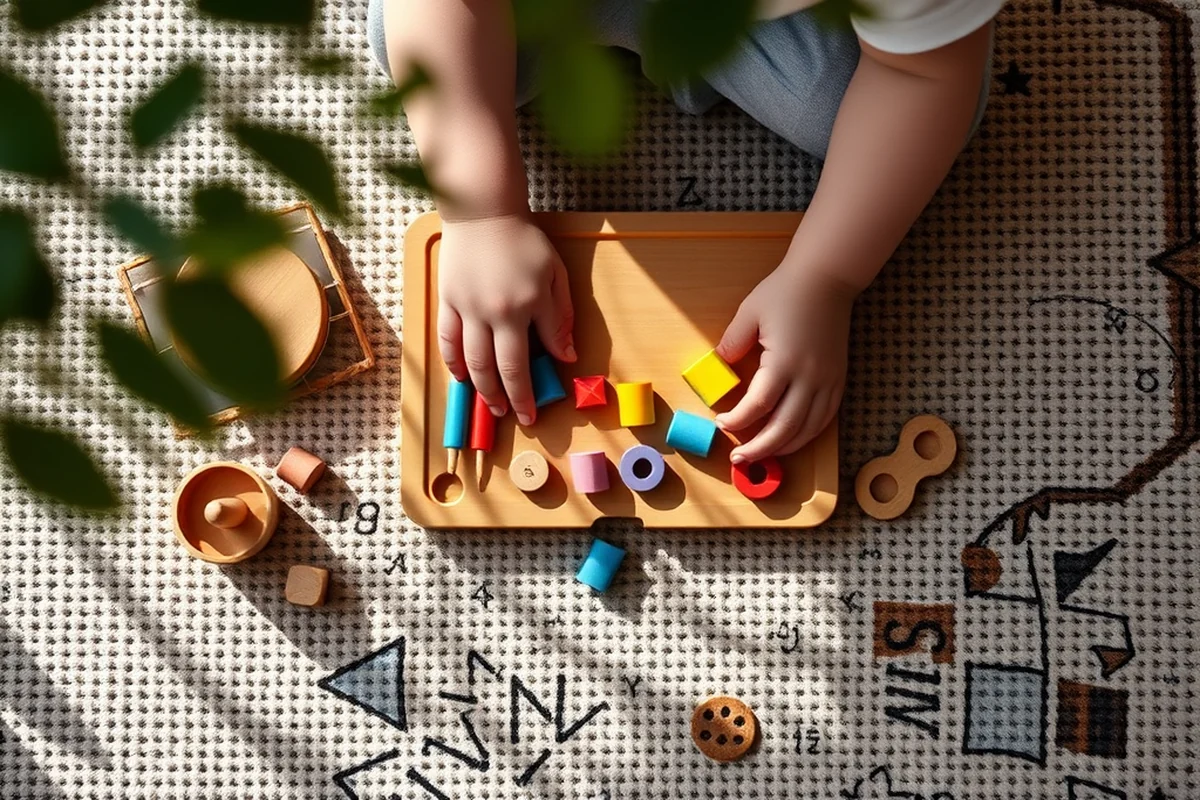
One of my favorite Montessori at home routines that actually work is to set up a ‘work table’ with a few open-ended materials — like wooden shapes, fabric scraps, or small containers. This encourages creativity and problem-solving, and it’s something she looks forward to every day.
Let them explore — it’s in the mess that learning happens.
Related: Montessori at home routines schedules checklist
Afternoon Routines That Encourage Reflection
I’ve started ending each afternoon with a simple reflection activity — whether it’s drawing a picture of the day, sharing a few thoughts, or just sitting quietly together. This helps my child process her experiences and express her feelings in a safe space.
I’ve noticed that this practice has helped my child develop a stronger sense of self and emotional awareness. She’s more able to identify her feelings and articulate them, which has been a huge benefit in our daily interactions.
A tip I learned from a Montessori educator is to keep the reflection time short and gentle, and to avoid turning it into a formal lesson. It’s about connection, not correction.
Use soft prompts like ‘What made you happy today?’ or ‘What did you learn?’ to encourage reflection without pressure.
“I remember the first time I tried to implement Montessori at home — I was overwhelmed by the sheer number of 'shoulds' and 'musts' that…”— Thetraylife editors
Related: Simple montessori at home routines schedules
Evening Routines That Promote Rest and Ritual
Evening routines are crucial for building a sense of security and routine. I’ve found that the most effective Montessori at home routines that actually work in the evening are ones that are calm, consistent, and focused on winding down. This might involve a bath, a quiet story, or a few minutes of soft music.
I’ve noticed that when my child is given a few choices in the evening — like picking a story or selecting a bedtime snack — she feels more in control of the process and transitions into sleep more easily. It’s a small but powerful way to reinforce autonomy.
One of the most important things I’ve learned is that consistency is key. Even if the exact activities change, keeping a predictable structure in the evening helps my child feel more secure and relaxed.
Related: Diy montessori at home routines
Weekend Routines That Encourage Connection
On weekends, I like to let go of the usual Montessori structure and focus on connection. This might mean going for a walk, playing a board game, or simply sitting together and talking. It’s a time to be present with my child without the pressure of routines.
I’ve noticed that these weekend routines have helped my child feel more connected to me and have also allowed her to explore her interests without the constraints of a structured day. It’s a beautiful reminder that Montessori isn’t just about learning — it’s about living.
One of the most important things I’ve learned is that flexibility is key. Even if the day doesn’t go as planned, it’s still a valuable time to connect and engage with your child in a meaningful way.
🧘 Gentle Approach
Focus on creating a calm, unhurried environment where your child can explore and learn at their own pace.
⚡ Fast-Track Approach
Implement key Montessori routines quickly with minimal setup, ideal for busy parents.
✈️ Travel/Away-From-Home Approach
Create portable Montessori-inspired activities that can be used on the go or while traveling.
👶 Multiples Approach
Adapt Montessori routines for multiple children, focusing on individual needs and shared learning opportunities.
🔄 Regression Reset Approach
Use Montessori principles to reset routines during challenging developmental phases or transitions.
| The mistake | Why it happens | The fix |
|---|---|---|
| Trying to force Montessori routines without considering your child’s needs. | Forced routines can create resistance and stress rather than empowerment and learning. | Start with small, flexible routines and observe your child’s reactions before making changes. |
| Overloading the environment with too many materials or activities. | Too many choices can overwhelm your child and make it hard for them to focus or engage deeply. | Offer a few high-quality materials and allow your child to explore them one at a time. |
| Focusing too much on the environment and not enough on the relationship. | Montessori is as much about the connection between parent and child as it is about the space. | Spend quality time with your child even when they’re engaged in their own activities — observe, ask questions, and be present. |
| Not being consistent with routines. | Children thrive on predictability and structure, so inconsistent routines can be confusing and stressful. | Create a simple, consistent schedule that your child can follow, and be flexible when necessary without losing the core structure. |
Related: Montessori at home routines tips
Montessori At Home Routines That Actually Work
Related: Best montessori at home routines
Routines for Navigating Transitions with Grace
Introducing smooth transitions is key to a Montessori home, and this section provides actionable tips for doing so.
Transitions are often the most challenging part of a day, especially for young children who thrive on consistency and predictability. I’ve found that using a visual schedule with clear, illustrated cues helps my child understand what’s coming next. For example, a small wooden board with magnetic icons representing activities like 'snack time' or 'outside play' lets them see the flow of the day. This not only reduces anxiety but also builds a sense of control, a core principle of Montessori education.
I also use gentle verbal cues and transition songs to signal changes. When moving from one activity to another, I say, 'It’s time for our clean-up song,' and we sing a short, familiar tune together. This creates a sense of rhythm and helps my child shift focus without resistance. I’ve noticed that incorporating these rituals has made transitions smoother and less stressful for both of us.
Another tip that has worked well is allowing my child to participate in preparing for the next activity. For instance, before going outside, we put on our shoes and gather our toys in one spot. This gives them a sense of involvement and responsibility. It’s amazing how much more cooperative they become when they feel like an active participant in their own day. These small, intentional steps make a big difference in fostering independence and emotional regulation.
Common Questions
How do I know if my Montessori routines are working?
What if my child doesn’t want to follow the routine?
Can I mix Montessori routines with other parenting styles?
How long does it take to see results from Montessori routines?
References
Cite this guide
Thetraylife (2026). Montessori At Home Routines That Actually Work. https://thetraylife.com/montessori-at-home-routines-that-actually-work/
Feel free to cite or share this guide.