
Montessori At Home By Age Stage Checklist
📖 Table of Contents
- 0–12 Months: Creating a Safe, Sensory-Friendly Environment
- 12–24 Months: Encouraging Independence Through Practical Life
- 2–3 Years: Fostering Language and Fine Motor Skills
- 3–5 Years: Encouraging Exploration and Creativity
- 5+ Years: Supporting School Readiness and Self-Direction
- Make It Your Way
- Frequently Asked Questions
When my son turned two, I found myself overwhelmed by the sheer number of toys, books. Activities that claimed to be 'Montessori.' I wanted a home environment that fostered independence, learning, and curiosity, but I had no clear roadmap. That’s when I discovered the power of a Montessori at home by age stage checklist. It’s not about buying every item on a list or following a rigid structure; it’s about creating a responsive, developmentally appropriate space that grows with your child. This checklist became my anchor, guiding me from the chaos of early toddlerhood to the more structured needs of a school-age child.
The Montessori method, developed by Dr. Maria Montessori in the early 20th century, is more than a curriculum—it’s a philosophy that values autonomy, respect, and hands-on learning. When I first heard about Montessori at home, I imagined a sterile, overly structured environment. But nothing could have been further from the truth. What I found instead was a way to design a home that invites exploration, supports natural developmental stages, and helps children build confidence through purposeful, meaningful activities. The key is to tailor the environment to the child’s age, abilities, and interests, which is where the Montessori at home by age stage checklist comes in.[1]
This checklist is not just a list of items to purchase or activities to perform. It’s a living, evolving guide that helps parents understand their child’s needs at each developmental stage and respond with intentional, hands-on learning. Whether it’s the first time your toddler learns to pour water or the moment your preschooler begins to understand fractions through real-life tasks, this checklist gives you the tools to make those milestones meaningful. It’s about creating a home that is a classroom, a playground, and a sanctuary—all at once.
Why You'll Love This Montessori At Home By Age Stage Checklist
- It offers a clear, developmental guide that aligns with your child’s natural learning curve.
- It helps you create a home that is both safe and stimulating, encouraging independence.
- It’s adaptable, so it can be tailored to your family’s lifestyle, space, and budget.
- It makes learning a joyful, hands-on experience that your child will want to participate in.
0–12 Months: Creating a Safe, Sensory-Friendly Environment
As of September 2026, Between 0 and 12 months, your baby is developing rapidly, learning to grasp, crawl, and eventually walk. This is the time to introduce soft, open-ended materials like cloth books, textured toys, and high-contrast images to stimulate visual development. The Montessori approach during this phase emphasizes freedom of movement and exploration, so it’s important to keep the environment uncluttered and safe.[2]
I replaced my baby’s crib with a floor bed to encourage independent movement and create a sense of security. This change allowed her to explore her surroundings safely and develop her gross motor skills. A key part of the Montessori at home by age stage checklist for this stage is ensuring that all materials are free from small parts and are age-appropriate.
I also added a few low shelves with soft, washable toys that encouraged grasping and sensory exploration. One of the most impactful changes I made was introducing a sensory bin with rice and soft blocks, which my baby loved. This simple addition helped her learn cause and effect, while also giving me a moment to breathe and take care of myself.
Keep the floor clear of obstacles to allow free movement. A few soft mats and a small, open shelf can turn your living room into a safe, engaging space for your baby to explore.
Part of our Montessori at home by age stage guide.
12–24 Months: Encouraging Independence Through Practical Life
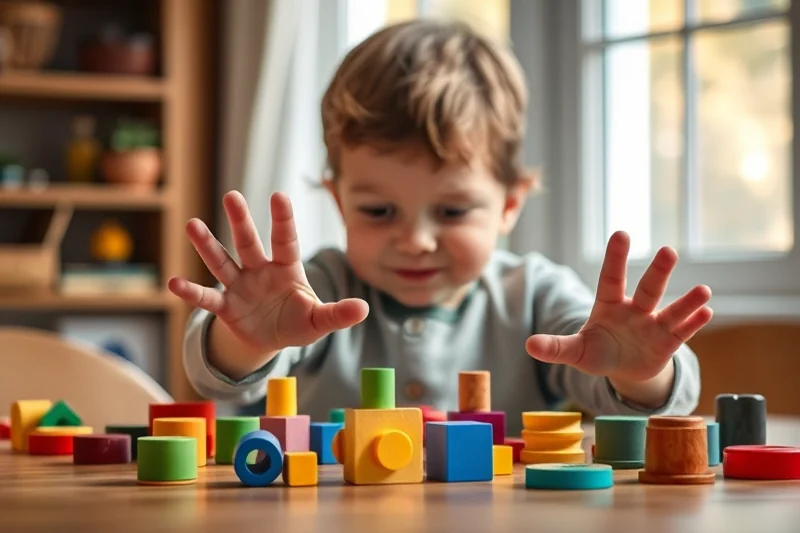
Between 12 and 24 months, your toddler is developing a strong sense of independence. This is the perfect time to introduce simple, child-sized tools that allow them to participate in daily life—like a small watering can, a mini vacuum, or a small broom. These activities not only support motor development but also build a sense of purpose and responsibility.[3]
I started by placing a small step stool by the sink and giving my toddler a child-sized cup for pouring water. It didn’t take long for her to begin helping with simple tasks like wiping the table or sorting laundry. These activities were incredibly empowering for her, and I saw a noticeable increase in her confidence as she completed these small, meaningful tasks.
One of the most important aspects of the Montessori at home by age stage checklist during this stage is ensuring that all tools are safe and age-appropriate. I kept a few basic tools on a low shelf, and I made sure that any activity I introduced was something she could complete independently. The result was a more confident toddler and a more relaxed parent.
Give your toddler the tools to do real work, and watch her grow.
Related: Quick montessori at home by age stage
2–3 Years: Fostering Language and Fine Motor Skills
Between two and three years old, your child is becoming more articulate and curious. This is the perfect time to introduce materials that support language development, such as picture books, alphabet cards, and simple puzzles. These activities help build vocabulary, cognitive skills, and fine motor control.
I started placing a small language shelf in my living room, filled with picture books, alphabet puzzles, and tracing sheets. My daughter loved sorting the letters and matching them to the corresponding pictures. This not only helped her develop her vocabulary but also gave her a sense of accomplishment as she completed each task.
Another key part of the Montessori at home by age stage checklist during this stage is making sure that all materials are accessible and inviting. I used low shelves and labeled containers, which made it easy for my daughter to explore on her own. The result was a more engaged, curious child who loved learning through hands-on activities.
Use simple labels to help your child recognize objects and build vocabulary. This can be applied to everyday items like the toilet, sink, or even a cup of water.
“When my son turned two, I found myself overwhelmed by the sheer number of toys, books, and activities that claimed to be 'Montessori.' I wanted…”— Thetraylife editors
Related: Affordable montessori at home by age stage
3–5 Years: Encouraging Exploration and Creativity
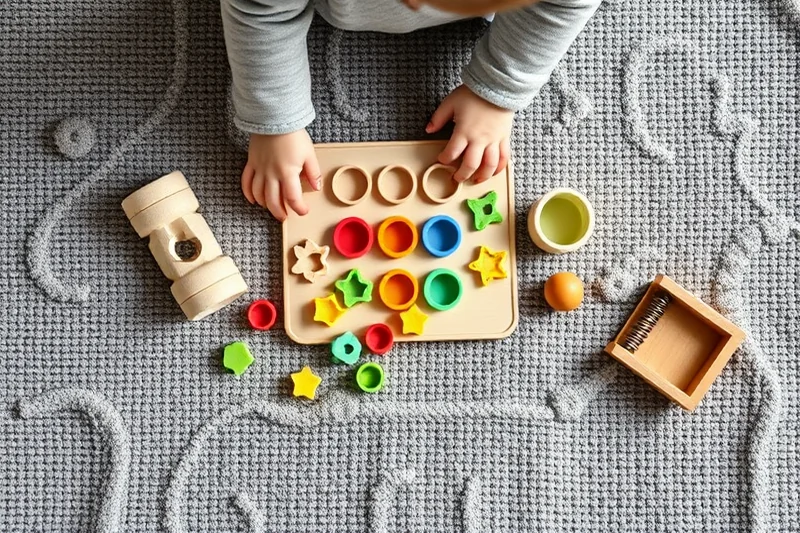
Between three and five years old, your child is developing a stronger sense of self, curiosity, and creativity. This is the time to introduce materials that encourage open-ended exploration, such as building blocks, art supplies, and nature-based activities. These activities help build problem-solving skills, imagination, and confidence.
I started a nature table with leaves, rocks, and flowers we collected on walks. My son loved sorting the items by size, color, and texture. This simple activity not only encouraged exploration but also helped him develop classification skills and a deeper connection to the natural world.
Another important part of the Montessori at home by age stage checklist during this stage is allowing your child to lead their own learning. I let my son choose his own activities and materials, and I made sure that I was always available to support him, rather than direct him. The result was a more confident, self-directed child who loved learning through play.
Related: Diy montessori at home by age stage
5+ Years: Supporting School Readiness and Self-Direction
Between five and seven years old, your child is developing the skills they will need for school, including focus, organization, and problem-solving. This is the time to introduce materials that support reading, writing, and math, while also allowing your child to take the lead in their learning.
I started introducing more structured activities like letter formation, simple math games, and reading practice. My daughter loved using a small whiteboard to practice writing her name and numbers. These activities helped build her confidence and prepared her for the transition to school.
Another key part of the Montessori at home by age stage checklist during this stage is encouraging self-direction. I made sure that my daughter had access to a variety of materials and that she was given the freedom to choose her own activities. This helped her develop a sense of responsibility and ownership over her learning.
🌿 Gentle Montessori
A relaxed, low-pressure approach that focuses on creating a calm, respectful environment without rigid structures or expectations.
🚀 Fast-Track Montessori
An accelerated version that introduces key Montessori concepts quickly, ideal for busy parents who want to see results fast.
🧳 Travel/away-from-home Montessori
A portable, adaptable approach that allows you to maintain a Montessori-inspired environment even when on the go or staying with family.
👶 Multiples Montessori
A tailored version that supports the unique needs of multiples, including shared play, individual learning, and co-dependent development.
🔄 Regression Reset Montessori
A focused approach to help children who are experiencing developmental regression or behavioral changes, using structure and consistency to support growth.
| The mistake | Why it happens | The fix |
|---|---|---|
| Trying to do too much at once | Overloading your home with too many activities or materials can overwhelm your child and make it difficult to maintain a focused, intentional environment. | Start with a few key materials and gradually introduce new activities as your child shows interest and readiness. |
| Not allowing your child to lead the way | Montessori at home is about following the child’s lead, not imposing a rigid schedule or curriculum. | Observe your child’s interests and let them choose their own activities and materials. Be available to support, not direct. |
| Using materials that are too advanced for your child’s stage | Using materials that are too complex can frustrate your child and discourage exploration. | Choose materials that are developmentally appropriate and match your child’s current abilities and interests. |
| Ignoring the importance of rest and routine | A Montessori-inspired home should still include a balance of activity and rest, as well as a consistent daily routine that supports your child’s well-being. | Incorporate rest times, meals, and transitions into your daily routine, and make sure your child has a consistent schedule that supports their learning and development. |
Related: Best montessori at home by age stage
Montessori At Home By Age Stage Checklist
Related: Affordable montessori at home stage
Common Questions
What is a Montessori at home by age stage checklist?
Do I need to buy special Montessori materials?
How can I incorporate Montessori at home if I have limited space?
Is Montessori at home suitable for all children?
References
- Understanding Teacher Identity Construction: Professional ... (files.eric.ed.gov)
- Preschool - Maine's Early Learning and Development Standards (maine.gov)
- Guidelines for Early Learning in Child Care Home Settings (cde.ca.gov)
Cite this guide
Thetraylife (2026). Montessori At Home By Age Stage Checklist. https://thetraylife.com/montessori-at-home-by-age-stage-checklist/
Feel free to cite or share this guide.