
Montessori At Home Stage Examples
📖 Table of Contents
When my daughter turned two, I found myself staring at a Montessori classroom video, wondering if we could bring that same calm and purpose into our own home. I had read about the philosophy. I was still confused about how to translate it into actual, daily practices for a toddler who was more interested in climbing the couch than picking up a wooden spoon. That’s when I realized I needed real, concrete examples — not just theory — to guide me through each stage of her development. Montessori at home stage examples became my lifeline, offering a roadmap that felt both practical and meaningful.
I started by observing how my daughter interacted with her environment. She loved stacking blocks, sorting shapes, and even pretending to clean up after herself. These moments, small as they were, hinted at a deeper readiness for structured learning. But I didn’t know how to harness that energy into something consistent or intentional. It wasn’t until I found resources that broke down Montessori principles by developmental stage that things began to click. Suddenly, the idea of Montessori at home wasn’t just an aspiration — it was a series of achievable steps.
The key was to understand that Montessori at home stage examples aren’t about forcing a rigid curriculum but rather creating an environment where learning naturally flows from a child’s interests and abilities. For instance, in the toddler stage, it’s less about reading books and more about letting a child explore and manipulate objects safely. My own journey taught me that the most impactful Montessori experiences at home are the ones that align with what a child is already doing — and that’s where the magic begins.[1]
Why You'll Love This Montessori at Home Approach
- It fosters independence and self-confidence in your child from an early age.
- It provides a structured yet flexible framework that adapts to your child’s developmental stage.
- It creates a calm, purposeful environment that encourages learning through exploration.
- It offers a way to bring Montessori philosophy into your everyday home life, without the need for expensive materials or formal classes.
Understanding the Montessori Stages at Home
As of October 2026, the Montessori method is divided into stages, each with its own learning goals and materials. For example, in the toddler stage, the focus is on motor skills, independence, and sensory exploration. This means having low shelves, child-sized furniture, and simple tools like small brooms or sponges for cleaning.
A typical toddler is between 18 and 30 months old, and during this time, they are fascinated by repetition, sorting, and imitation. In my home, I set up a small corner with sorting trays and a mirror, which became one of my daughter’s favorite spots for independent play.
It’s important to remember that Montessori at home doesn’t require a complete overhaul of your space. Small, intentional changes — like adding a few child-accessible shelves or introducing a self-care station — can make a big difference.
Set up a small table with soft textures, blocks, and sorting trays. Let your child explore freely and guide them with simple prompts like, 'Can you find the red one?'
Part of our Montessori at home by age stage guide.
The Role of the Parent in Montessori at Home
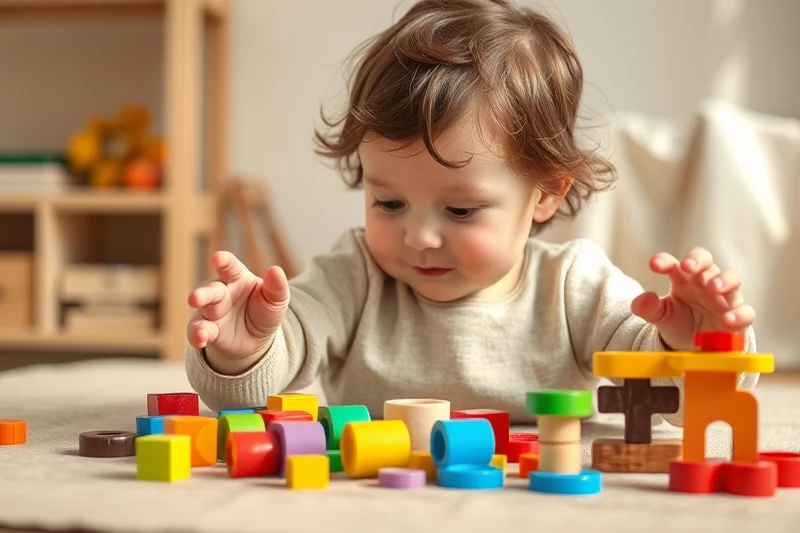
I learned early on that my job wasn’t to direct every activity but to step back and let my daughter explore on her own. For example, when she was sorting beads by color, I didn’t interfere unless she asked for help. This taught me the power of patience and the importance of letting a child lead the learning process.
One of the hardest lessons was to stop myself from correcting every small mistake. Instead of saying, 'No, that’s not the right way,' I’d say, 'Hmm, interesting. Let me see.' This shift in approach helped my daughter feel more confident in trying new things.
The best Montessori at home experiences happen when parents are present but not overbearing. It’s a balance of support and freedom that requires practice and a shift in mindset.
Let the child lead the way — they know what they need when they need it.
Related: Montessori at home stage tips
Montessori at Home for Preschoolers
Between the ages of 3 and 6, preschoolers are ready for more structured activities that promote independence and concentration. At this stage, I introduced a daily routine that included things like folding laundry, setting the table, and watering plants. These tasks, though simple, helped build a sense of responsibility.
I also invested in a few key materials like a Montessori number rod set and a puzzle tray with geometric shapes. These items not only kept my daughter engaged for longer periods but also helped her develop fine motor skills and problem-solving abilities.
One of the biggest surprises was how much my child loved the routine. She looked forward to her tasks and even began offering help without being asked, which was a huge win for our family.
Create a visual schedule with pictures of daily tasks. Use a timer to help your child understand when it’s time to move on to the next activity.
“When my daughter turned two, I found myself staring at a Montessori classroom video, wondering if we could bring that same calm and purpose into…”— Thetraylife editors
Related: Montessori at home by age stage step by step
Montessori at Home with Multiple Children
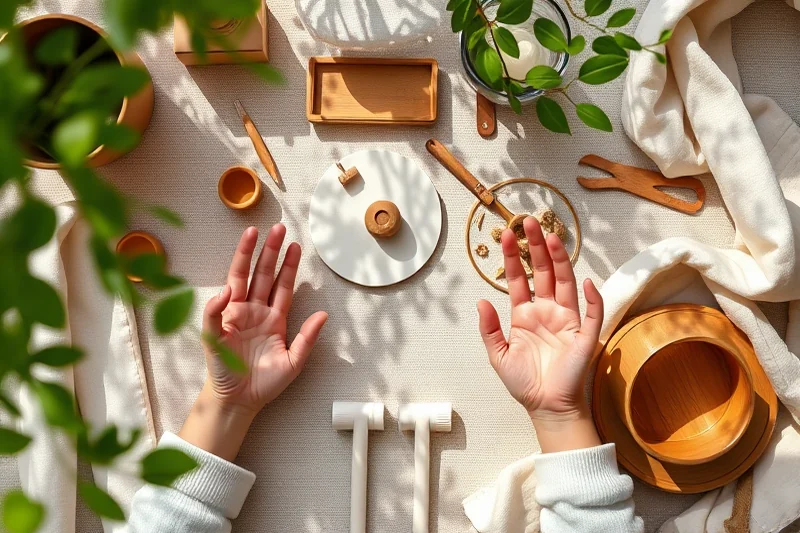
When my second child came along, I realized that managing Montessori at home for two different developmental stages required a different approach. I had to find materials that could be used by both children but also adapt my space to meet their needs.
I started by dividing the play area into zones — one for my toddler and one for my preschooler — which helped minimize chaos and allowed each child to focus on their own activities. It also gave me more time to assist one child without neglecting the other.
I also found that having a few flexible materials, like stacking cups or a sorting tray with different shapes, worked well for both age groups. This approach allowed me to maintain a Montessori at home environment that was both engaging and manageable.
Related: Montessori at home by age stage examples
Montessori at Home and the Importance of Natural Materials
I was surprised to learn that the Montessori philosophy emphasizes the use of natural, unembellished materials like wood, stone, and fabric. These items provide a tactile experience that is different from plastic or overly decorated toys.
In our home, I replaced many of our plastic toys with wooden blocks, wooden puzzles, and fabric scarves. My daughter loved the texture of the wood and the softness of the fabric, and she even started to take more time with her play, exploring each item in detail.
One of the most satisfying parts of this change was seeing how my child’s play became more focused and intentional. The natural materials didn’t distract her — they engaged her in a way that felt meaningful and purposeful.
🌿 Gentle Montessori at Home
This approach focuses on creating a calm, uncluttered space that allows a child to explore at their own pace without pressure.
🚀 Fast-Track Montessori at Home
Ideal for parents who want to introduce Montessori principles quickly with minimal setup and a focus on key developmental skills.
✈️ Travel-Friendly Montessori at Home
Designed for families on the go, this variation uses portable, lightweight materials that can be used anywhere, even while traveling.
👶 Montessori at Home for Multiples
Tailored for families with more than one child, this approach includes strategies for managing different developmental stages in the same space.
🔄 Montessori at Home for Regression Reset
This variation is perfect for parents who want to re-introduce Montessori principles after a period of disconnection or a challenging phase in their child’s development.
| The mistake | Why it happens | The fix |
|---|---|---|
| Using overly decorated or plastic materials | These materials can be distracting and do not provide the same sensory experience as natural materials like wood or fabric. | Opt for simple, unembellished items made from natural materials to support your child’s development. |
| Trying to introduce too many Montessori activities at once | This can overwhelm your child and dilute the effectiveness of the approach. | Start with a few key activities and gradually introduce more as your child becomes more interested and capable. |
| Not allowing your child to lead the learning process | Forcing a child to follow a rigid structure can stifle their natural curiosity and motivation to learn. | Observe your child’s interests and let them guide the activities, offering support and encouragement as needed. |
| Ignoring the importance of a child’s individual stage of development | Introducing activities that are too advanced or too simple can lead to frustration or disengagement. | Tailor your Montessori at home environment to your child’s current developmental stage to ensure a positive and meaningful experience. |
Related: Simple montessori at home by age stage
Montessori At Home Stage Examples
Related: Montessori at home by age stage tips
Montessori At Home: Creating a Prepared Environment for Toddlers
Creating a prepared environment for toddlers at home is crucial in Montessori practice, focusing on safety, accessibility, and independence.
When I began implementing Montessori principles for my toddler, I realized that the home environment needed to be carefully curated to support their developmental needs. This meant keeping low shelves filled with child-sized tools, like small pots, brushes, and cloth scraps, all within reach. I also made sure that everything was safe — no sharp edges, small parts, or toxic materials — because a toddler’s world is one of exploration and experimentation. By doing this, I noticed how much more engaged my child became with activities that were both stimulating and secure.
I also introduced simple, purposeful activities that aligned with the toddler stage, such as pouring water from one container to another or sorting objects by size and color. These activities not only helped develop fine motor skills but also gave my toddler a sense of accomplishment. I made sure to step back and observe rather than intervene, allowing them to work through challenges independently. This was a shift from my previous approach, where I often jumped in to help, and it was eye-opening to see how capable they were when given the right tools and space.
One of the most impactful changes I made was reducing clutter and focusing on a few, high-quality materials that could be used in multiple ways. For example, a wooden spoon could be used for stirring, tapping, or even as a pretend microphone. This approach not only supported the Montessori principle of simplicity but also encouraged creativity and problem-solving. Over time, I saw a noticeable improvement in my toddler’s confidence and ability to navigate their environment with independence and curiosity.
Common Questions
What are the key materials needed for Montessori at home?
How do I know which Montessori stage my child is in?
Can I practice Montessori at home without a formal Montessori training?
How do I handle multiple children with different developmental stages?
References
Cite this guide
Thetraylife (2026). Montessori At Home Stage Examples. https://thetraylife.com/montessori-at-home-stage-examples/
Feel free to cite or share this guide.