
Montessori At Home By Age Stage For Beginners
📖 Table of Contents
When my daughter was two, she spent hours stacking wooden blocks in a specific order, only to knock them all down and start over. It wasn’t a tantrum—it was her learning how gravity works. That’s when I first heard the term 'Montessori at home by age stage for beginners,' and I knew there was something there. I didn’t know how to apply it, but I knew I wanted to give my kids an environment where they could explore, learn, and grow on their own terms.
I started by reading about Montessori principles, but the ideas felt too abstract. How do you translate a child’s freedom to explore into a home setting? How do you know what materials are appropriate for each age stage? What does it even look like when a toddler is learning independence through Montessori methods? These questions filled me with both excitement and uncertainty. I needed a roadmap that was practical, not just philosophical.[1]
That’s why I decided to test the Montessori method myself, step by step, and document every part of the journey. From baby-proofing shelves to arranging a practical life corner, I tried it all. I made mistakes, I adapted, and I found a way to bring Montessori into our home that worked for our family. If you're a beginner who wants to apply Montessori at home by age stage for beginners, this article is your starting point.
Why You'll Love This Montessori At Home Guide
- Clear, age-specific guidance on what materials and activities are most beneficial for your child’s development.
- Practical strategies for creating a Montessori-friendly environment without breaking the bank or your patience.
- Real-life insights from someone who has tested and refined the method with their own children.
- A focus on child-led learning that empowers your child to explore and grow at their own pace.
Understanding the Core of Montessori at Home
As of October 2026, the Montessori method emphasizes child-led learning, where children explore their world through hands-on materials and meaningful activities. Unlike traditional play, which often involves passive consumption, Montessori encourages active participation and sensory engagement. When I first started, I realized that the key was not to direct my children’s learning, but to set up an environment that invited them to discover on their own.
For example, I introduced my daughter to the 'practical life' area with a small table and shelves filled with real tools like a sponge, a small watering can, and a mini broom. This simple setup allowed her to mimic adult behaviors and build confidence in her abilities. It wasn’t about teaching her to clean, but about giving her the tools and space to do it herself.
I found that the most impactful changes came from observing my children and adjusting the environment based on their interests and abilities. It took time, but gradually, I saw a shift in how they approached learning. They were more curious, more engaged, and more willing to try new things.
Before buying any Montessori materials, focus on organizing your home in a way that encourages independence. Lower shelves, accessible storage, and child-friendly tools can make a huge difference.
Part of our Montessori at home by age stage guide.
Montessori for Toddlers: The Power of the Environment
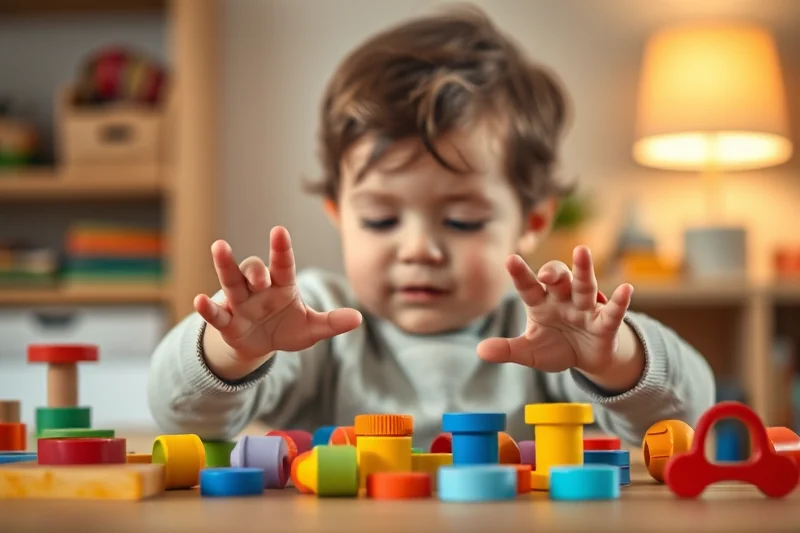
Between the ages of 18 months and 3 years, toddlers are naturally drawn to activities that involve movement, touch, and repetition. During this stage, I made a point to set up a small, low-to-the-ground area with items like stacking cups, buttons, and small puzzles. These materials are not only developmentally appropriate but also encourage problem-solving and fine motor skills.[2]
One of the most important aspects of Montessori for toddlers is the concept of 'work.' I introduced my daughter to simple 'jobs' like sorting laundry, pouring water, or feeding a pet. These activities helped her build confidence and a sense of purpose. Even though she wasn’t doing it perfectly, the act of participating was more important than the result.
I found that the best way to support a toddler in a Montessori environment is to be present, but not overbearing. Let them explore, make mistakes, and learn from them. If they knock over a tower of blocks, don’t immediately pick it up—let them figure out how to stack them again.
Let them explore, make mistakes, and learn from them.
Related: Montessori at home by age stage on a budget
Related: Montessori At Home By Age Stage Guide
Montessori for Preschoolers: Encouraging Independence
Between the ages of 3 and 6, children develop a stronger sense of self and are capable of more complex tasks. During this time, I started introducing more structured activities like reading, math with manipulatives, and nature studies. I created a reading nook with soft cushions and a small bookshelf that my daughter could reach on her own.[3]
I also invested in a few key Montessori materials, like a set of geometric shapes and a small set of number rods. These tools helped her understand abstract concepts through hands-on exploration. What surprised me was how quickly she picked up on the concepts, even without direct instruction.
One of the most important lessons I learned during this stage was to let the child take the lead. If she was interested in reading, I read with her. If she was drawn to math, we spent more time with that. It was a gentle shift in my parenting style, but one that made a huge difference in her confidence and enthusiasm for learning.
Preschoolers learn best when they follow their interests. Spend time observing your child and creating activities that align with what they’re naturally curious about.
“When my daughter was two, she spent hours stacking wooden blocks in a specific order, only to knock them all down and start over.”— Thetraylife editors
Related: Simple montessori at home stage
Montessori for Older Children: Building Life Skills
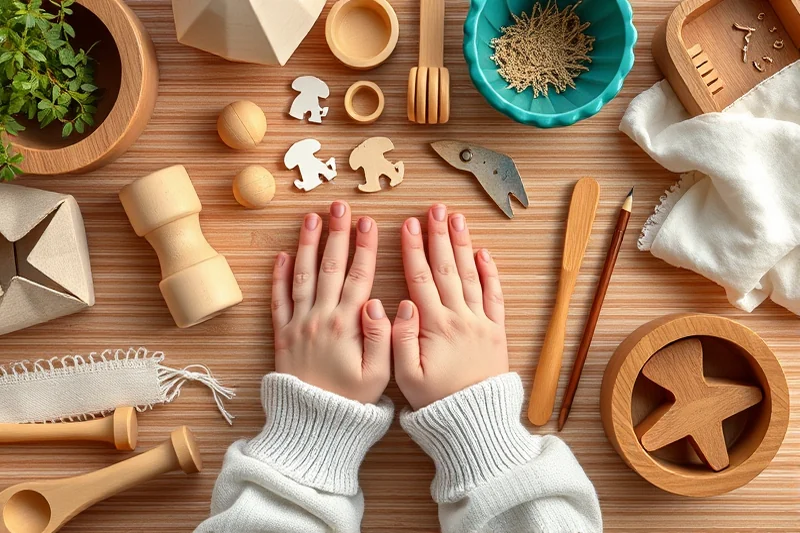
By the time children reach school age, they are capable of more complex tasks and have a stronger sense of responsibility. During this stage, I focused on teaching life skills like cooking, cleaning, and time management. I set up a small kitchen area with real utensils and ingredients that were safe for her to use.
I also introduced a weekly planner that my daughter could use to track her tasks and goals. This helped her develop a sense of ownership over her time and responsibilities. She would often come to me with ideas for activities she wanted to do, and I supported her in making them a reality.
What I found most rewarding was the way Montessori at home helped my daughter become more self-directed. She was more confident in making decisions, more responsible with her time, and more willing to take on challenges. It wasn’t just about learning—it was about growing into a capable, independent person.
Related: Montessori at home stage ideas
Montessori for All Ages: A Family Approach
One of the most surprising aspects of Montessori at home was how it affected the rest of my family. My husband and I started to adopt some of the same principles in our own lives, like organizing our space in a way that promoted efficiency and reducing clutter. It wasn’t just about the kids—it was about creating a home that worked for everyone.
We also made an effort to involve my parents in the Montessori approach. They found it refreshing to see the whole family working together in a way that respected each person’s independence. It wasn’t about control—it was about creating a space where everyone could thrive.
What I realized was that Montessori at home is not a one-size-fits-all approach. It’s a flexible philosophy that can be adapted to fit any family’s unique needs and rhythms. The key is to focus on creating an environment that supports everyone’s growth and development.
🌸 Gentle Montessori
A slow, flexible approach that follows the child’s natural pace and interests.
🚀 Fast-Track Montessori
A streamlined version of Montessori that focuses on key developmental milestones.
🧳 Travel-Friendly Montessori
A Montessori approach that can be adapted for families on the go or living in small spaces.
👶 Montessori for Multiples
A version of Montessori that supports siblings learning and growing together.
🔄 Montessori Regression Reset
A method to help children re-engage with Montessori principles after a period of resistance.
| The mistake | Why it happens | The fix |
|---|---|---|
| Overloading the home with too many Montessori materials | Too many materials can overwhelm a child and make it hard for them to focus on any one task. | Start with a few key materials that are developmentally appropriate and gradually add more as your child grows and explores. |
| Trying to control the learning process too much | Montessori is about child-led learning. If you’re constantly directing the process, it can undermine the child’s sense of autonomy. | Let your child take the lead. Offer choices and support their interests, but avoid taking over the learning experience. |
| Ignoring the child’s developmental stage | Using materials that are too advanced or too simple for a child’s stage can be frustrating and counterproductive. | Choose materials that match your child’s developmental stage and adjust as they grow. Observe their interests and abilities to guide your choices. |
| Focusing too much on the 'Montessori' label rather than the principles | Montessori is a philosophy, not a brand. Focusing too much on the label can lead to a rigid approach that doesn’t fit your family’s needs. | Focus on the principles of Montessori, like independence, natural learning, and respect for the child. Adapt them to fit your family’s unique rhythm and values. |
Related: How to montessori at home stage
Montessori At Home By Age Stage For Beginners
Related: Montessori at home stage mistakes to avoid
Common Questions
How do I know if Montessori is right for my child?
What are the most important materials to have at home for Montessori?
Can I apply Montessori principles even if I have a busy schedule?
What if my child doesn’t seem interested in Montessori activities?
References
Cite this guide
Thetraylife (2026). Montessori At Home By Age Stage For Beginners. https://thetraylife.com/montessori-at-home-by-age-stage-for-beginners/
Feel free to cite or share this guide.