
In Home Montessori Daycare Without Tools
📖 Table of Contents
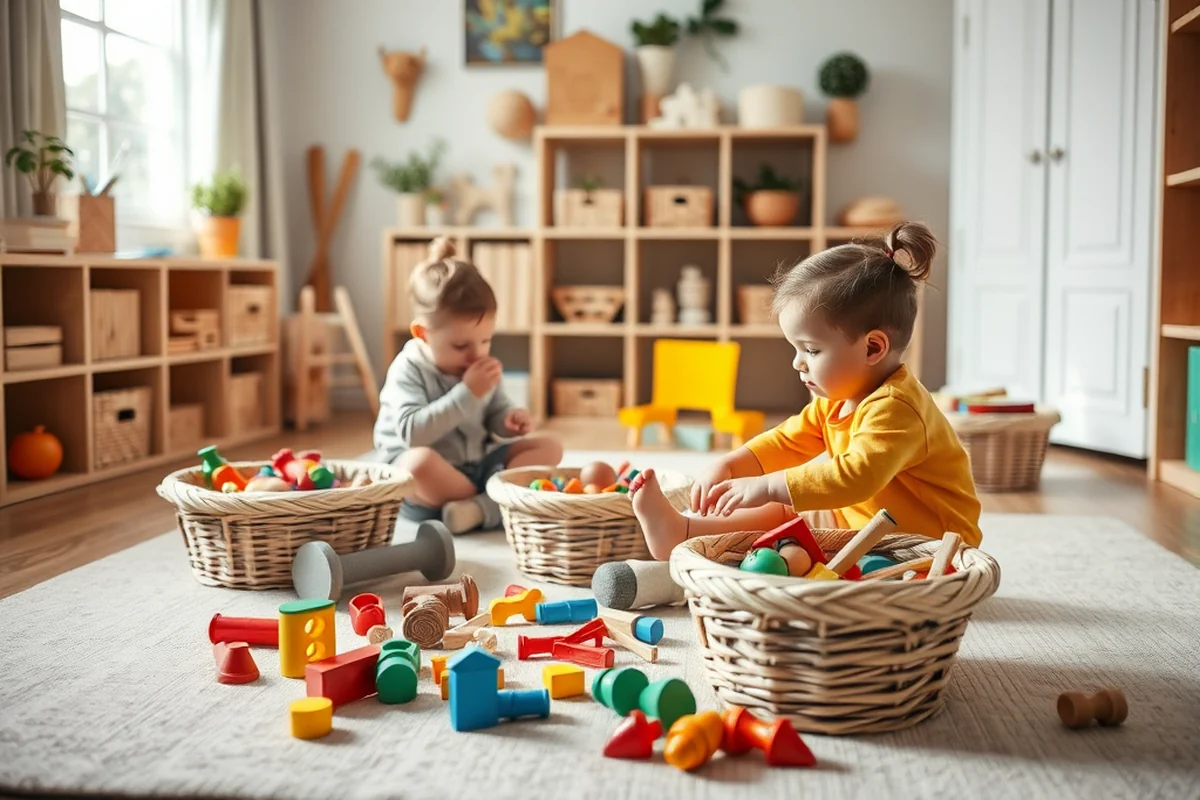
When I first started exploring Montessori principles for my toddler, I was overwhelmed by the idea of creating a full-fledged classroom environment in our home. I had heard about the importance of prepared environments and hands-on learning, but I didn't have the budget or the space for the tools often recommended. It wasn't until I realized that Montessori doesn't require expensive materials—it can be deeply embedded in everyday life, that I began to see the beauty of what's already around us. We started with a few simple changes: laying out small clothes for dressing practice, using kitchen tools for cooking, and even letting my toddler help with folding laundry. These small, intentional actions transformed our home into a place of curiosity and independence.[1]
I remember the moment my daughter, Lily, took her first steps toward independence. It was during a play session where I had left out a few wooden spoons and a bowl of pasta. She watched me for a moment, then grabbed a spoon, and began to scoop. Her hands were clumsy, her movements slow, but she was fully engaged. I didn't intervene—just smiled and watched. That moment taught me that Montessori isn't about the tools, but about the mindset. It's about creating an environment where a child can explore, make choices, and learn through doing. In our home, we've managed to create a Montessori-inspired daycare without any expensive tools or materials, and it's been one of the most rewarding choices we've made as parents.[2]
This article is for every parent who feels like they need a Montessori-inspired daycare but can't afford the tools, or who simply wants to bring Montessori principles into their home without the fuss. I'm sharing the real, actionable steps that have worked for us, including how to organize our space, what simple household items double as Montessori materials. How to foster a child's independence through everyday routines. We're going to talk about the philosophy, the practical steps, and the little victories we've seen along the way. In home Montessori daycare without tools is not only possible—it's deeply fulfilling.
Why You'll Love This Montessori-Inspired Daycare at Home
- It’s affordable and uses everyday items already in your home.
- It fosters independence, creativity, and a love of learning from a young age.
- It allows you to be fully present and engaged with your child.
- It builds a strong emotional and developmental foundation without the pressure of perfection.
Why Montessori Without Tools Works in the Home
As of September 2026, when I first heard about Montessori, I assumed it required a dedicated classroom with specific tools and materials. But what I learned was that the core of Montessori is the philosophy of allowing children to explore and learn at their own pace. This can be done with everyday objects. We use the same kitchen tools as adults, the same cleaning supplies, and even the same books. The idea is not to create a separate space for learning, but to make learning a natural part of daily life.
In our home, we’ve replaced the traditional Montessori tools with items we already had on hand. A wooden spoon becomes a tool for stirring, a cloth for wiping, and a small basket for sorting. This approach is not only cost-effective but also sustainable. It teaches our children that learning doesn’t have to be confined to a specific place or require special materials. It’s about the mindset of the parent and the environment they create.
One of the most surprising benefits of this approach is the way it builds confidence in both the child and the parent. When my daughter helps me clean up after a meal, she takes pride in her work. She learns that she can contribute, and I learn that I don’t need to be perfect or have the right tools to teach her. It’s a win-win.
Look around your home—there are countless items that can double as Montessori tools. A sponge can be used for wiping, a small pot for pouring, and even a broom for sweeping. Get creative with what you already have.
Part of our Montessori at home guide.
The Power of Observation in Montessori

One of the most profound lessons I’ve learned from Montessori is the importance of observation. I used to think I needed to be constantly teaching or guiding my child. But what I learned was that the best learning happens when we watch and wait. When I observe my daughter, I see what interests her, what she’s ready to try, and what she might need help with. This helps me create a space that supports her learning without overwhelming her.
For example, I noticed that my daughter was fascinated by the way water flowed from the sink. I didn’t immediately give her a cup or a bowl. Instead, I waited and watched. Eventually, she reached for a small bowl and began to pour. I didn’t correct her—just encouraged her. That moment was pure joy, and it taught me that the best Montessori learning happens when we allow children to explore on their own.
Observation also helps me know when it’s time to introduce new activities or tools. If I see my daughter repeatedly reaching for a small object but not picking it up, I know it might be time to introduce a different tool. Observation is the key to creating a Montessori-inspired environment that works for your child and your home.
Observation is the key to unlocking your child’s potential.
Related: Diy montessori at home for 3 year old
Related: Start montessori at home explained
Creating a Montessori-Inspired Space with No Tools
One of the biggest challenges I faced was organizing our home in a way that allowed my daughter to explore freely. I learned that it’s not about creating a perfect space, but about creating a space that is safe, accessible, and inviting. We started by decluttering our home and making sure that everyday items were within reach. This meant lowering shelves, using baskets for storage, and labeling items clearly.
We also focused on creating areas for different activities. For example, we have a small corner where we do simple cooking tasks, and another where we sort and clean. These areas are defined by simple, clear boundaries and labeled baskets. It’s not about making everything Montessori—it’s about making the space functional and inviting for a child.
The result has been a home that feels more open, more purposeful, and more welcoming. My daughter now knows where things are, she can find what she needs, and she can explore independently. It’s a small change, but it’s made a huge difference in our daily lives.
Labels are a simple but powerful tool in creating a Montessori-inspired environment. Use clear, simple labels to help your child understand where things belong and what they are used for.
“When I first started exploring Montessori principles for my toddler, I was overwhelmed by the idea of creating a full-fledged classroom environment in our”— Thetraylife editors
Related: Natural montessori at home
Related: Free montessori lessons online
The Role of Routine in Montessori at Home
Routines are more than just schedules—they're a way of creating a sense of predictability and security for your child. In Montessori, we emphasize the importance of a child’s natural rhythms and the need for structure that supports them. This means having consistent times for meals, play, rest, and learning.
In our home, we've created a daily schedule that includes time for play, time for learning, and time for rest. We follow the same schedule every day, and it’s helped our daughter feel more secure and confident. She knows what to expect, and this helps her learn and grow in a more structured way.
Routines also help teach responsibility and independence. For example, we have a morning routine where we get dressed, eat breakfast, and then go for a walk. This helps my daughter learn about the day ahead and feel in control of her time. It’s a small but powerful way of fostering independence and structure in our home.
Related: Cheap start montessori at home
The Benefits of Montessori Without Tools
One of the most surprising benefits of Montessori without tools has been the way it has fostered independence in my daughter. She’s learned to dress herself, to clean up after meals, and to find what she needs without help. These are skills that have been built through simple, everyday activities rather than through any special tools or materials.
Another benefit has been the way it has strengthened our relationship as a family. Because we’re not focused on perfection or special tools, we’re able to be more present with each other. We’re learning together, exploring together, and enjoying each other’s company without the pressure of creating a perfect Montessori environment.
Perhaps the most profound benefit has been the way it has helped my daughter develop a love of learning. She’s naturally curious, and this approach has allowed her to explore and learn at her own pace. It’s not about pushing her or forcing her to learn—it’s about creating an environment where learning is a natural and joyful part of everyday life.
⭐ Classic
The original recipe with whole wheat bread and almond butter for a wholesome and satisfying snack.
💰 Budget
Use regular white bread and peanut butter to make this snack more affordable without losing its charm.
⚡ Extra-Fast
Skip the baking and simply spread almond butter on slices of bread for a quick and easy snack.
✨ Depth
Add sliced bananas, raisins, or chocolate chips to the bread for extra flavor and texture.
🥗 Light
Use whole grain bread and natural almond butter for a lighter, healthier option with fewer added sugars.
| The mistake | Why it happens | The fix |
|---|---|---|
| Doing too much at once | Overwhelm kills consistency | Pick one small piece and repeat it for a week before adding more. |
| Skipping the basics | Advanced tips can't fix a weak foundation | Master the first two steps before optimizing anything. |
In Home Montessori Daycare Without Tools
Common Questions
How do I know if my child is ready for Montessori at home?
Can I still use Montessori tools if I want to?
What if I don’t have time to create a Montessori-inspired environment?
How can I encourage my child to explore independently?
References
- Montessori education's impact on academic and nonacademic outcomes: A ... (pmc.ncbi.nlm.nih.gov)
- The Power of Playful Learning in the Early Childhood Setting (naeyc.org)
Cite this guide
Thetraylife (2026). In Home Montessori Daycare Without Tools. https://thetraylife.com/in-home-montessori-daycare-without-tools/
Feel free to cite or share this guide.